

Odoo ERP vs Zoho CRM

Odoo ERP vs Zoho CRM

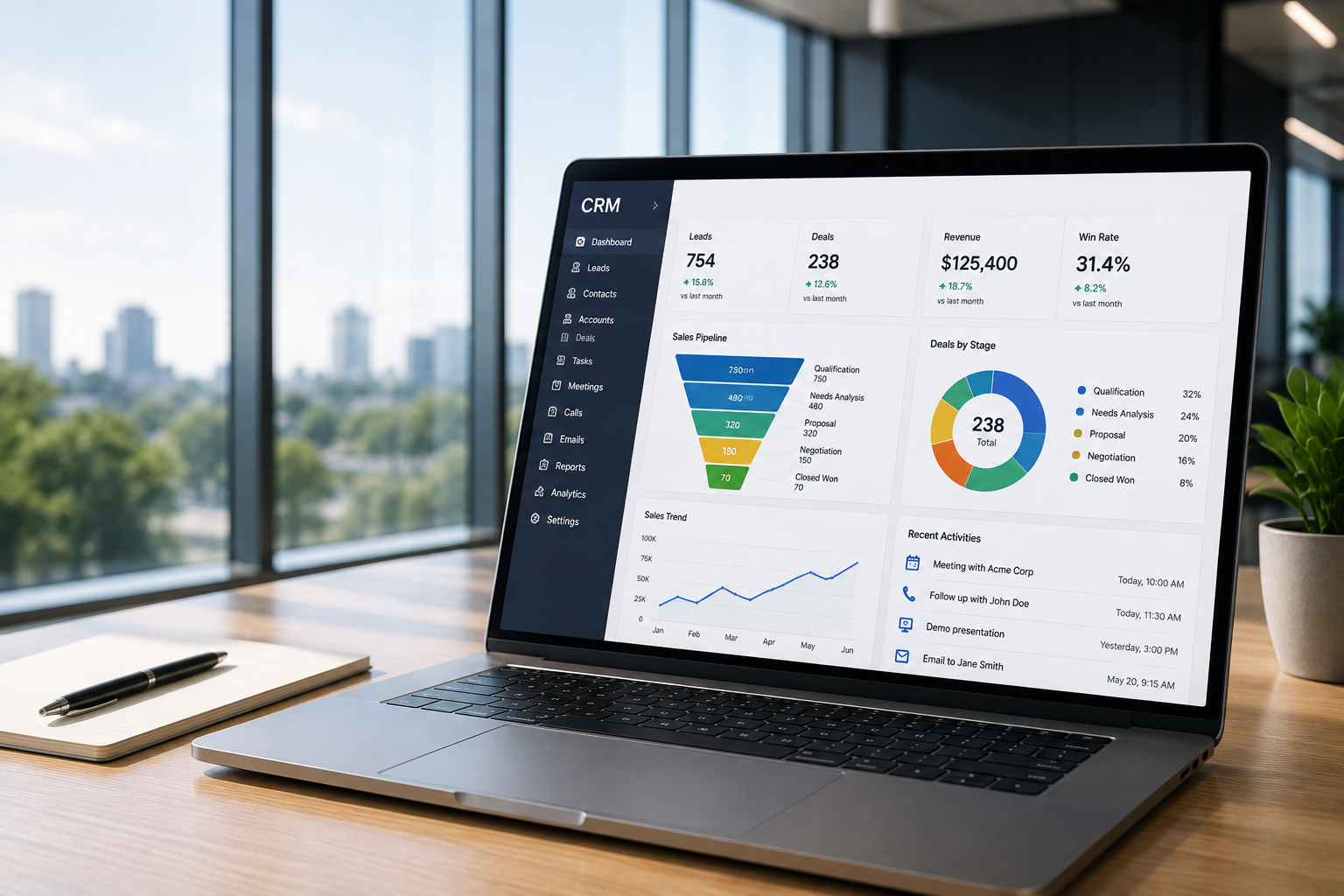
Businesses evaluating Odoo ERP vs Zoho CRM are often comparing a complete ERP platform with a dedicated CRM solution. While both support customer relationship management, Odoo ERP integrates CRM with accounting, inventory, manufacturing, purchasing, HR, and other core business operations, whereas Zoho CRM focuses on lead management, sales automation, customer engagement, and pipeline management.

This comparison examines features, pricing, customization, implementation, integrations, scalability, and business use cases to help you determine which solution best aligns with your operational requirements, business processes, and long-term growth strategy.

Odoo ERP vs Zoho CRM at a Glance

Feature Odoo ERP Zoho CRM
Best For Small, Mid-Sized & Growing Businesses Sales Teams, Small & Mid-Sized Businesses
Primary Focus Enterprise Resource Planning (ERP) Customer Relationship Management (CRM)
Deployment Cloud & On-Premise Cloud-Based
Open Source Community Edition Available No
Customization Highly Flexible Moderate
User Interface Modern & Intuitive Simple & User-Friendly
Core Capabilities CRM, Sales, Accounting, Inventory, Manufacturing, HR, Purchasing & Projects Lead Management, Contact Management, Sales Pipeline, Workflow Automation & Customer Engagement
Scalability Excellent for Business Growth Suitable for Growing Sales Teams
Integrations Extensive APIs & Third-Party Integrations Integrates with Zoho applications and third-party business tools
Typical Cost Modular & Flexible Pricing Subscription-Based Pricing

What is Odoo ERP?

Odoo ERP is a modular enterprise resource planning (ERP) platform that integrates CRM, Sales, Accounting, Inventory, Manufacturing, Purchasing, Human Resources, Project Management, and other core business functions into a single unified system. Its modular architecture enables businesses to implement only the applications they need while expanding functionality as operational requirements grow.

Available in both cloud and on-premise deployments, Odoo ERP is designed for organizations seeking a scalable, customizable solution to streamline business processes, improve operational efficiency, and support long-term growth.

Odoo ERP Modular

What is Zoho CRM?

Zoho CRM

Zoho CRM is a cloud-based customer relationship management (CRM) platform that helps businesses manage leads, contacts, sales opportunities, customer interactions, and sales pipelines from a single application. It also includes features for workflow automation, email integration, sales forecasting, reporting, and customer engagement to improve sales productivity and relationship management.

Designed primarily for sales teams and growing businesses, Zoho CRM offers a user-friendly interface, subscription-based pricing, and integration with a wide range of business applications. While it provides robust CRM capabilities, organizations requiring finance, inventory, manufacturing, or other ERP functions typically need additional software or integrations to support end-to-end business operations.

Odoo ERP vs Zoho CRM: Feature Comparison

Both Odoo ERP and Zoho CRM help businesses improve customer relationships and operational efficiency, but they are designed for different business objectives. Odoo ERP is a comprehensive enterprise resource planning (ERP) platform that combines CRM with finance, inventory, manufacturing, purchasing, human resources, project management, and other core business functions within a single system. Zoho CRM is a dedicated customer relationship management (CRM) solution focused on managing leads, contacts, sales pipelines, customer interactions, and sales automation. The following comparison highlights the key differences between the two platforms.

Business Management

🟣 Odoo ERP
Integrated ERP platform with CRM, Sales, Accounting, Inventory, Manufacturing, Purchasing, Human Resources, Project Management, Helpdesk, and other business applications within a single unified system. Businesses can activate only the modules they need.
🔵 Zoho CRM
Dedicated CRM platform designed to manage leads, contacts, customer interactions, sales pipelines, workflow automation, and customer engagement throughout the sales lifecycle.

User Experience

🟣 Odoo ERP
Modern and intuitive interface that provides a consistent user experience across all ERP modules and business functions.
🔵 Zoho CRM
Clean and user-friendly interface designed to help sales teams manage customer relationships, sales activities, and daily tasks efficiently.

Customization

🟣 Odoo ERP
Highly customizable workflows, dashboards, reports, automation rules, and business modules. Organizations can develop custom applications to support unique operational requirements.
🔵 Zoho CRM
Supports customizable sales pipelines, workflow automation, custom fields, layouts, reports, and CRM processes to match different sales and customer management workflows.

Scalability

🟣 Odoo ERP
Modular architecture enables businesses to expand by adding new ERP modules, users, and business functions as operational requirements grow.
🔵 Zoho CRM
Designed to support growing sales teams with scalable lead management, customer relationship management, and sales automation capabilities.

Integration

🟣 Odoo ERP
Supports extensive API integrations with e-commerce platforms, payment gateways, logistics providers, enterprise applications, and third-party business systems.
🔵 Zoho CRM
Integrates with email platforms, marketing tools, customer support applications, productivity software, and third-party business solutions through APIs and marketplace integrations.

Odoo ERP vs Zoho CRM Pricing

Pricing is one of the most important considerations when selecting a business management platform. Beyond software licensing, organizations should evaluate the total cost of ownership (TCO), including implementation, customization, training, integrations, maintenance, and long-term support. Choosing the right solution means balancing initial investment with future scalability and operational value.

Pricing Comparison

Cost Factor Odoo ERP Zoho CRM
Licensing Modular licensing based on selected applications and users. Subscription-based pricing with plans based on features and user requirements.
Implementation Flexible implementation tailored to business processes and ERP requirements. Generally quicker to deploy for sales teams using standard CRM features.
Customization Highly flexible and scalable through configurable modules, workflows, and custom development. Supports workflow automation, custom fields, layouts, and CRM process configuration.
Training Training requirements depend on the ERP modules and business processes implemented. Typically easier for sales and customer service teams to adopt.
Total Cost of Ownership Often cost-effective for businesses seeking a unified ERP platform that supports multiple business functions. Subscription costs generally increase as additional users, advanced CRM features, and integrations are required.

Business Insight

Businesses seeking a comprehensive ERP platform with integrated finance, inventory, manufacturing, HR, and CRM capabilities often find Odoo ERP to be a strong choice. Organizations primarily focused on customer relationship management, sales automation, and lead management may find Zoho CRM well suited to their requirements. The right choice depends on your business processes, operational complexity, and long-term growth strategy.

Odoo ERP vs Zoho CRM: Pros & Considerations

Every business has unique operational requirements, making it important to evaluate the strengths and potential considerations of each platform before selecting a solution that aligns with your business goals.

Odoo ERP
Advantages Considerations
Modular ERP platform that grows with your business. Some advanced business requirements may require custom module development.
Integrates CRM, Sales, Accounting, Inventory, Manufacturing, HR, Purchasing, and Project Management within one platform. Selecting an experienced implementation partner is important for maximizing business value.
Highly flexible customization and workflow automation. Implementation timelines vary depending on business complexity.
Cloud and on-premise deployment options. User training and change management help ensure successful adoption.
Strong scalability for growing and expanding businesses.
Zoho CRM
Advantages Considerations
Easy-to-use CRM platform with a user-friendly interface. Focuses primarily on customer relationship management rather than complete ERP functionality.
Strong lead management, contact management, and sales pipeline capabilities. Businesses requiring finance, inventory, manufacturing, or HR management may need additional software or integrations.
Built-in workflow automation, reporting, and sales forecasting. Advanced business process customization may require additional configuration or third-party integrations.
Subscription-based pricing with flexible plans. Costs may increase as additional users and advanced CRM features are added.
Quick deployment for many sales and customer management teams.

Which ERP Should You Choose?

Choosing the right solution depends on your organization’s business requirements, operational complexity, and long-term growth strategy.

Choose Odoo ERP If...
  • A modular ERP platform that grows with your business.
  • Integrated CRM, Sales, Accounting, Inventory, Manufacturing, HR, Purchasing, and Project Management.
  • Flexible customization to support unique business workflows.
  • A centralized system that connects multiple departments.
  • A scalable ERP solution designed for long-term business growth.
Consider Zoho CRM If...
  • A dedicated CRM solution for managing leads, contacts, and customer relationships.
  • Sales pipeline management and workflow automation.
  • Customer engagement and sales performance tracking.
  • A cloud-based CRM with quick deployment and straightforward implementation.
  • A scalable CRM platform for growing sales teams.

Why Partner with Odoobots for Odoo ERP Implementation?

Choosing the right ERP platform is only the first step. Achieving long-term value from your ERP investment depends on selecting an implementation partner who understands your business processes, operational challenges, and growth objectives.

At Odoobots, we take a business-first approach to every Odoo ERP implementation. Rather than applying a one-size-fits-all methodology, we work closely with your team to understand existing workflows, identify improvement opportunities, and implement an ERP solution tailored to your business requirements.

Our Odoo ERP Services

  • Business Process Analysis – Evaluate existing operations and identify opportunities to improve efficiency.
  • Odoo ERP Implementation – Configure and deploy Odoo based on your business requirements.
  • Customization & Module Development – Extend Odoo with custom workflows, reports, and business applications.
  • Third-Party Integrations – Connect Odoo with e-commerce platforms, payment gateways, logistics providers, and other business systems.
  • Data Migration – Securely migrate business data from legacy applications into Odoo ERP.
  • User Training & Support – Help your teams adopt Odoo successfully through training, optimization, and ongoing technical support.

Whether you’re implementing ERP for the first time, replacing disconnected systems, or migrating from another business platform, Odoobots helps you plan, implement, customize, and optimize Odoo ERP to support long-term business success

Frequently Asked Questions (FAQs)

Which is better: Odoo ERP or Zoho CRM?

The right choice depends on your business requirements. Odoo ERP is ideal for organizations seeking a comprehensive ERP platform that integrates CRM, accounting, inventory, manufacturing, HR, purchasing, and project management within a single system. Zoho CRM is better suited for businesses primarily focused on customer relationship management, lead management, sales automation, and pipeline management.

Can Odoo ERP replace Zoho CRM?

Yes. Odoo ERP includes a built-in CRM module that enables businesses to manage leads, opportunities, customer interactions, and sales activities while also connecting CRM with accounting, inventory, purchasing, manufacturing, and other business operations. Organizations looking for a unified business management platform often evaluate Odoo ERP as an alternative to using a standalone CRM solution.

Is Odoo ERP more customizable than Zoho CRM?

Odoo ERP is highly customizable, allowing businesses to configure workflows, automate processes, develop custom modules, and integrate third-party applications to support unique operational requirements. Zoho CRM also provides customization through workflow automation, custom fields, layouts, and reports, but its primary focus remains customer relationship management rather than complete ERP functionality.

Which solution is more suitable for growing businesses?

Both solutions support business growth, but they address different needs. Odoo ERP is designed for organizations seeking a scalable ERP platform that expands by adding business modules as operational requirements evolve. Zoho CRM is well suited for businesses looking to scale their sales processes, customer relationship management, and sales automation capabilities.

Why choose Odoobots for Odoo ERP implementation?

Odoobots provides end-to-end Odoo ERP implementation services, including business process analysis, ERP implementation, customization, third-party integrations, data migration, user training, and ongoing support. Our business-first approach helps organizations implement Odoo ERP in a way that aligns with their operational requirements and long-term growth strategy.

Ready to Transform Your Business with Odoo ERP?

If you’re comparing Odoo ERP vs Zoho CRM, the next step is choosing a solution that aligns with your business processes, operational requirements, and long-term growth strategy.

At Odoobots, we help businesses evaluate requirements, develop implementation strategies, and deploy scalable Odoo ERP solutions that streamline operations, improve efficiency, and support successful digital transformation.

Online Enquiry