Odoo Supply Chain Management

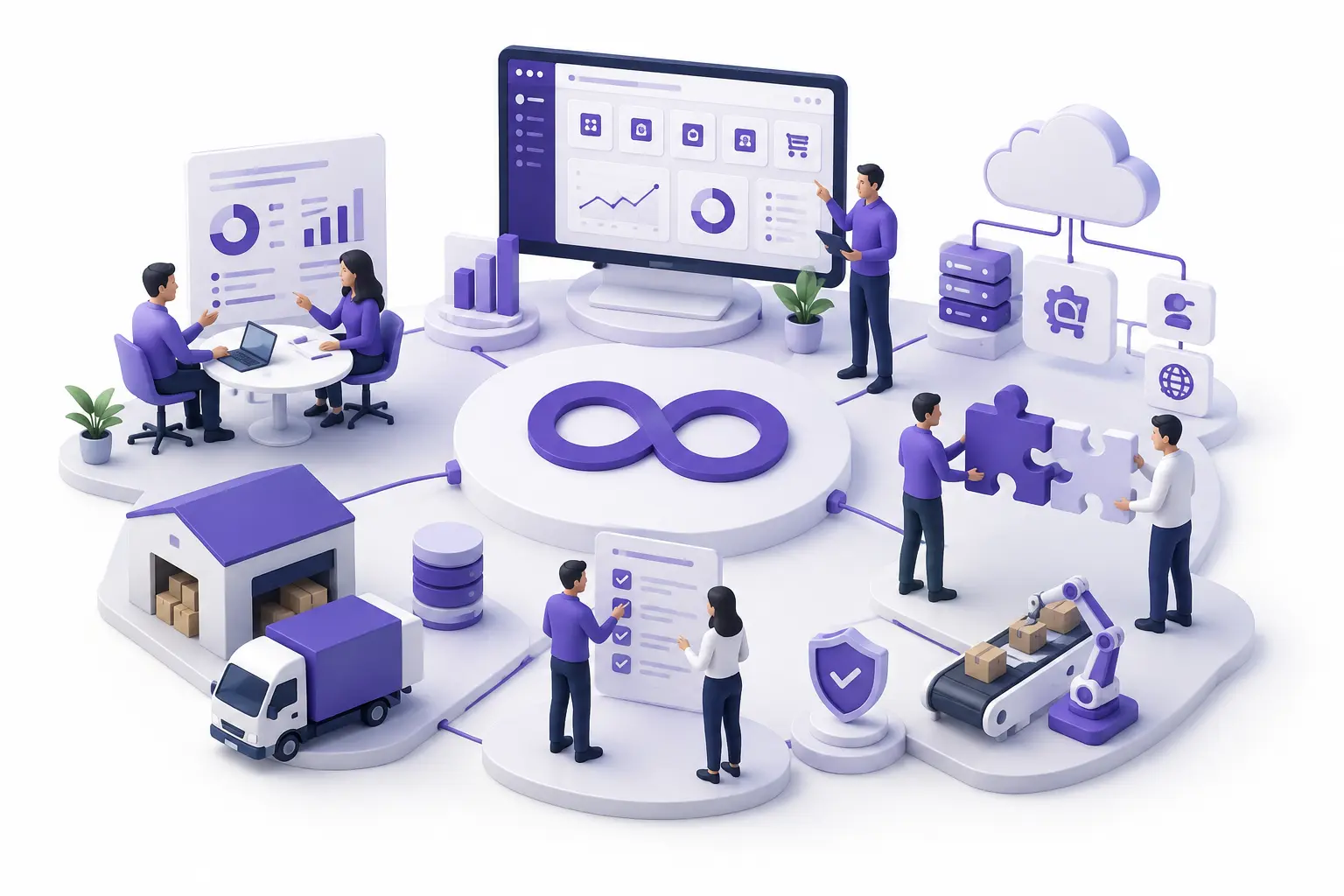
Gain control over the operations that keep your business moving. Odoo connects inventory, warehouses, purchasing, manufacturing, and fulfillment in one ERP environment, giving teams better visibility into stock, operational activity, and product movement across locations.

OdooBots implements and configures Odoo around how your business actually operates. We design the solution around your warehouse structure, inventory policies, replenishment requirements, workflows, integrations, reporting, and user needs—using standard Odoo functionality wherever it fits and customization where a genuine requirement calls for it.
Odoo-Management

What Does Odoo Manage Across Your Operations?

Odoo ERP Connected Operations
Inventory Stock visibility
Purchasing Supply coordination
Manufacturing Production planning
Fulfillment Product movement
Warehouses · Locations · Routes · Replenishment · Workflows

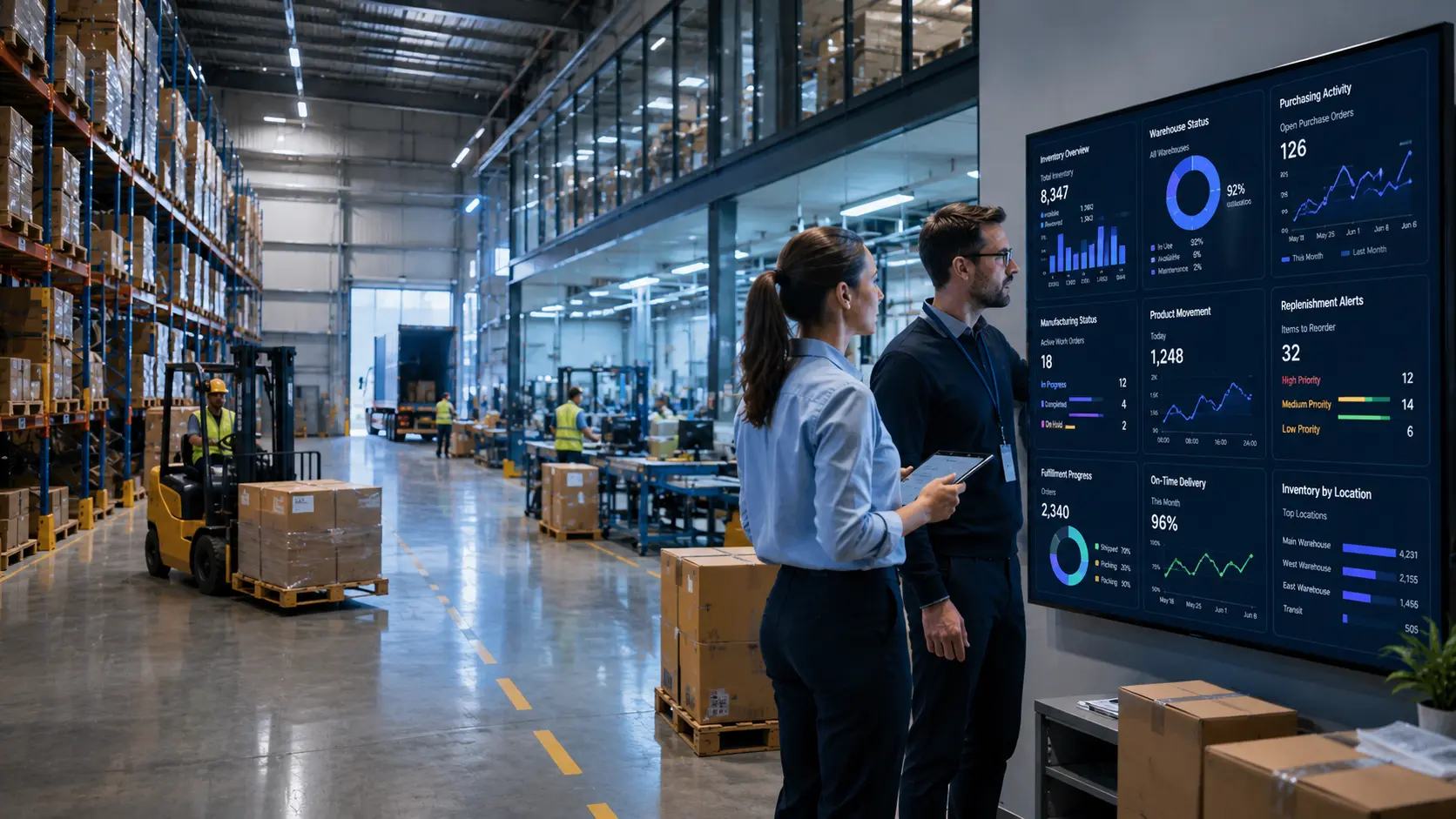
Odoo connects inventory, purchasing, manufacturing, warehouse operations, and fulfillment through shared operational data, helping teams coordinate activities from one ERP environment.

Odoo can be configured around how these processes work together—using routes, replenishment methods, warehouses, locations, inventory rules, and workflows to support your actual operating model.

Configure Odoo Around Your Operations

Every business operates differently. A company managing several warehouses may need one location to replenish another, while different products may require different replenishment or planning methods.

Odoo supports these requirements through routes, replenishment rules, reordering rules, Make to Order (MTO), and Master Production Schedule (MPS). The configuration can be designed around how your teams actually manage inventory, locations, and product movement.

The goal is not to activate every available feature. It is to build the right combination of rules and workflows for your business and keep them connected across the ERP.

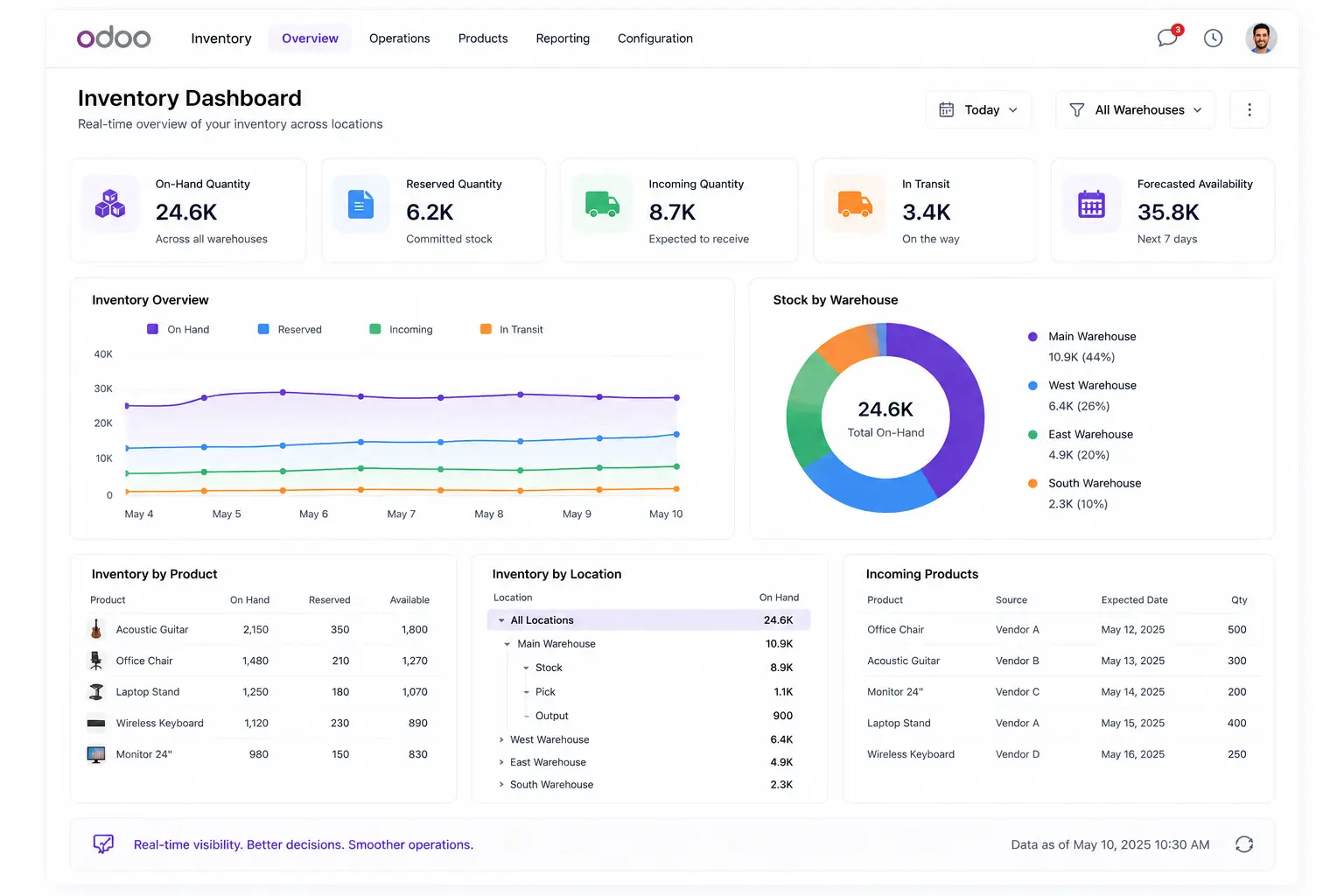
Manage Inventory Across Warehouses and Locations

As businesses grow, inventory becomes harder to manage across multiple warehouses, storage areas, and internal movements. Odoo provides a structured way to organize warehouses and locations while supporting the processes used to receive, store, move, pick, pack, and ship products.

Warehouse operations can be configured with different levels of control, including one-step, two-step, and three-step flows, while routes and putaway rules can help determine how products move through the operation.

The goal is to create an inventory structure that reflects how products physically move through your business, without adding unnecessary operational complexity.

Manage-Inventory

Replenishment and Planning

Replenishment is not a one-size-fits-all process. Different products may require different approaches depending on demand, lead times, stock policies, and whether they are purchased or manufactured.

Odoo supports planning methods such as Reordering Rules, Make to Order (MTO), and Master Production Schedule (MPS). The appropriate approach can be configured according to the product, operational requirements, and planning strategy.

Reordering Rules

Maintain stock according to defined replenishment thresholds and can trigger or suggest purchasing or manufacturing when requirements are reached.

Make to Order (MTO)

Links procurement or manufacturing to confirmed demand when products are sourced or produced specifically for an order.

Master Production Schedule (MPS)

Supports longer-term planning by helping teams work with forecast quantities and planned purchasing or manufacturing requirements.

The right implementation depends on the business. Using every replenishment method does not necessarily create a better system; the objective is to apply the right approach where it fits.

Routes and Operational Rules

Some businesses need products to follow different paths depending on the warehouse, product, operation, or business requirement. Odoo routes can help define these movements between locations using configured push and pull rules.

They can support processes such as internal replenishment, multi-stage warehouse operations, manufacturing supply, quality-control movements, returns, and different fulfillment paths.

The important part of implementation is not creating routes simply because the feature exists. Routes should reflect the actual way products move through the business and remain practical for the teams responsible for using and maintaining them.

Connect Purchasing, Manufacturing and Fulfillment

Purchasing, manufacturing, warehouse operations, and sales often depend on the same product and availability information. When these processes are disconnected, teams can struggle to coordinate sourcing, production, inventory, and customer fulfillment.

Odoo connects these operational functions through its Purchase, Inventory, Manufacturing, and Sales capabilities, allowing information and transactions to move between processes instead of creating isolated workflows.

The implementation can then be structured around how your teams actually work together—from sourcing and production requirements to inventory availability and customer fulfillment.

Odoo Implementation Approach

A successful Odoo implementation requires more than configuring applications. It starts with understanding how your business operates and translating those requirements into a practical ERP solution.

01

Business & Operational Discovery

02

Process Analysis

03

Solution Design

04

Configuration & Development

05

Data Migration, Testing & Training

06

Go-Live & Optimization

Why Choose OdooBots?

Choose-OdooBots

Business-First Implementation

We begin with your operating model rather than starting with a list of features.

Standard Odoo Where It Fits

We avoid unnecessary customization by evaluating standard functionality and configuration first.

Technical Process Understanding

Our approach considers the relationships between products, locations, warehouses, replenishment, purchasing, manufacturing, and fulfillment.

Integration Capability

Where your operation depends on external systems, the implementation can include the required integration strategy.

Practical Configuration

The objective is not to create the most complicated Odoo database. It is to create a system that users can understand, operate, and maintain.

End-to-End Support

From discovery through design, configuration, migration, testing, training, and go-live, OdooBots can support the implementation lifecycle.

Frequently Asked Questions

What can Odoo manage?

Odoo can support interconnected operational processes involving inventory, warehouses, replenishment, purchasing, manufacturing, sales fulfillment, product movement, and related business functions.

Can Odoo manage multiple warehouses?

Yes. Odoo supports multiple warehouses and can be configured for inter-warehouse replenishment and internal transfers.

Can Odoo automate replenishment?

Yes. Odoo supports Reordering Rules, Make to Order (MTO), and Master Production Schedule (MPS) approaches, depending on the business requirement.

Can Odoo support complex warehouse processes?

Yes. Odoo supports multi-step inbound and outbound flows, routes, storage locations, putaway rules, and other warehouse controls.

Can Odoo be customized for our operations?

Yes. Standard functionality should be evaluated first. Where a genuine requirement cannot reasonably be addressed through configuration, customization or integration can be considered.

How is Odoo Management different from Odoo Procurement?

Odoo Procurement focuses primarily on sourcing and purchasing activities, while this broader management approach covers operational areas such as inventory, warehouses, locations, replenishment, product movement, and fulfillment.

Build an Odoo System Around the Way You Operate

Your ERP should reflect the way your products move, your teams work, and your business makes operational decisions.

OdooBots helps businesses design and implement Odoo around their actual requirements—from inventory and warehouse structures to replenishment, routes, integrations, reporting, and business-specific workflows.

Online Enquiry