
How Long Does Odoo ERP Implementation Take
One of the most common questions businesses ask before starting an ERP project is, “How long does Odoo implementation take?” The answer depends on several factors, including business size, the number of modules required, data migration needs, customizations, and user training requirements.
While some organizations can go live within a few weeks, larger businesses may need several months to complete a full deployment. In our experience with ERP deployment projects, implementation timelines are influenced by business workflows, data quality, customization requirements, integration needs, and user adoption strategies. Proper planning during the early stages often reduces delays and improves project outcomes.
Working with an experienced Odoo ERP implementation company helps streamline the process, reduce delays, and ensure that the system supports long-term business growth.
In this guide, we explore the typical Odoo implementation timeline and the factors that influence project duration.
How Long Does Odoo ERP Implementation Typically Take?
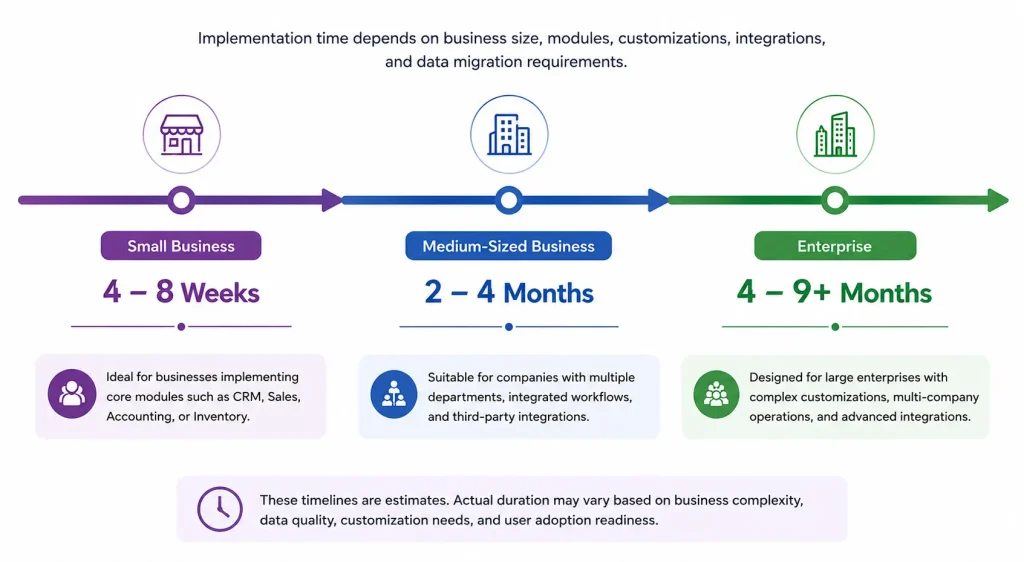
Small businesses typically complete Odoo implementation within 4–8 weeks, medium-sized businesses within 2–4 months, and large enterprises may require 4–9 months or more, depending on customizations, integrations, and data migration requirements.
Factors That Affect Odoo ERP Implementation Time
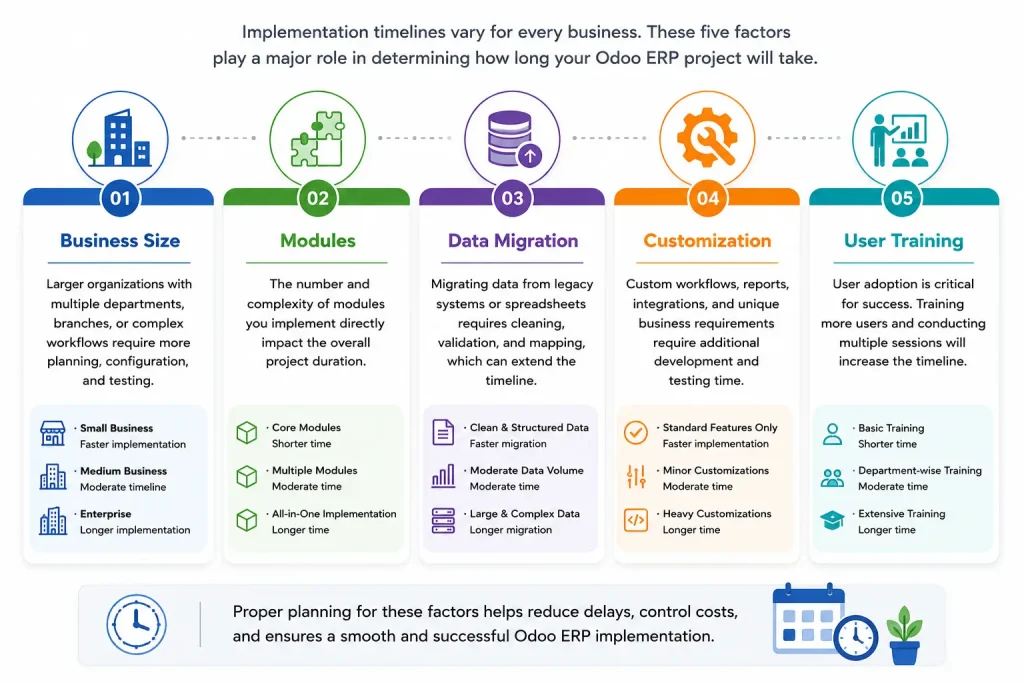
No two businesses operate in exactly the same way, which means implementation timelines can vary significantly. Several key factors determine how quickly an Odoo project can be completed.
Business Size and Complexity
Small businesses with straightforward processes usually require less time for implementation than organizations with multiple departments, branches, or complex workflows. Companies that need advanced manufacturing, procurement, or multi-company management often require additional planning and configuration.
Number of Odoo Modules
The implementation timeline largely depends on the modules being deployed. A business implementing only accounting and CRM can typically launch faster than one integrating inventory, manufacturing, HR, sales, and customer support within a single environment.
Data Migration Requirements
Migrating data from spreadsheets or legacy software requires careful preparation. Customer records, products, financial information, inventory data, and employee details must be validated before being transferred into Odoo.
The more historical data involved, the longer the migration process may take.
Customization and Integrations
Standard Odoo functionality covers many business requirements. However, organizations that require custom workflows, third-party integrations, or specialized reports should expect additional development and testing time.
An experienced Odoo ERP implementation company can help determine which requirements should use standard features and which genuinely require customization.
User Training and Change Management
Successful ERP projects depend on user adoption. Employees need time to learn new processes and understand how to use the system effectively. Training sessions, documentation, and testing activities all contribute to the overall project timeline.
Typical Odoo ERP Implementation Timeline
Although every project is unique, the following estimates provide a general guideline.
Small Business Implementation (4–8 Weeks)
Small businesses that implement core modules such as CRM, sales, accounting, or inventory can often complete deployment within one to two months.
Typical activities include:
- Business requirement analysis
- Basic system configuration
- Data migration
- User training
- Go-live support
Medium-Sized Business Implementation (2–4 Months)
Organizations with multiple departments and integrated workflows generally require additional time for testing and optimization.
Implementation usually involves:
- Multiple Odoo modules
- Department-specific configurations
- Third-party software integrations
- Data cleansing and migration
- Employee training programs
Enterprise Implementation (4–9 Months or More)
Large enterprises often require extensive customization, complex approval processes, and integration with existing systems.
These projects typically include:
- Multi-company operations
- Manufacturing automation
- Custom development
- API integrations
- Advanced reporting requirements
- Phased deployment strategies
Working with a reliable Odoo ERP implementation company becomes especially important for enterprise projects, where proper planning can significantly reduce implementation risks.
The Main Phases of Odoo ERP Implementation
Understanding the implementation process helps businesses set realistic expectations and allocate resources effectively.
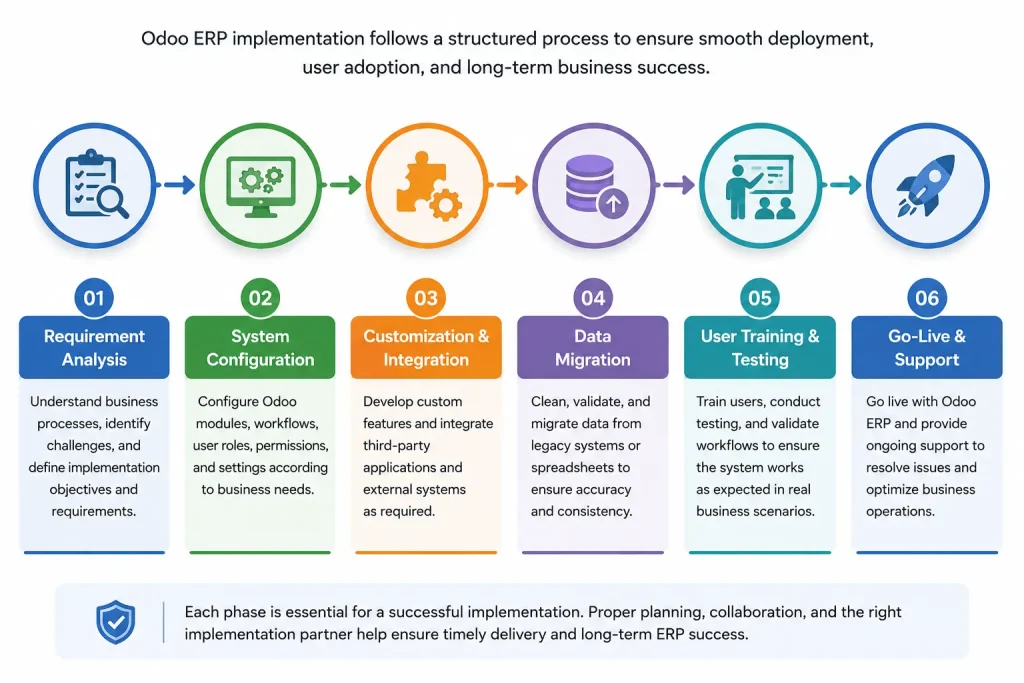
1. Requirement Analysis
The project begins with understanding existing business processes, identifying challenges, and defining implementation objectives. This phase establishes the foundation for the entire ERP system.
2. System Configuration
After gathering requirements, the Odoo environment is configured according to business needs. Modules, user roles, workflows, and permissions are established during this stage.
3. Customization and Integration
If required, developers create custom features and integrate external applications such as payment gateways, eCommerce platforms, logistics systems, or accounting tools.
4. Data Migration
Business data is cleaned, validated, and transferred into the new ERP environment. Proper migration ensures data accuracy and minimizes operational disruptions after deployment.
5. User Training and Testing
Employees participate in training sessions and user acceptance testing to verify that the system functions correctly within real business scenarios.
6. Go-Live and Support
The final phase involves launching the system and providing post-implementation support to address issues, optimize workflows, and ensure smooth business operations.
How Businesses Can Reduce Implementation Time
Several best practices can help organizations accelerate their Odoo projects without compromising quality.
Define Clear Requirements Early
Unclear requirements often cause delays and increase project costs. Businesses should establish priorities and implementation goals before development begins.
Use Standard Odoo Features Whenever Possible
Odoo provides extensive built-in functionality for most industries. Minimizing unnecessary customization helps reduce implementation time and simplifies future upgrades.
Prepare Data Before Migration
Cleaning customer records, product catalogs, and financial information in advance can significantly speed up the migration process.
Involve Key Employees
Department managers and end users should participate throughout the implementation process. Their feedback helps identify issues early and improves user adoption.
Partner with an Experienced Odoo Team
Choosing the right Odoo ERP implementation company ensures that projects follow proven methodologies, realistic timelines, and industry best practices.
Why the Right Odoo ERP Implementation Company Matters
Technology alone does not guarantee ERP success. The expertise of the implementation partner plays a critical role in determining project outcomes.
An experienced implementation company understands how to align Odoo with existing business processes, avoid unnecessary customizations, manage data migration efficiently, and provide effective training for employees.
The right partner also helps businesses plan for future growth, ensuring that the ERP system remains scalable as operational requirements evolve.
Frequently Asked Questions
Most small businesses can complete Odoo implementation within 4 to 8 weeks, depending on the number of modules, data migration requirements, and employee training needs.
Business complexity, customizations, third-party integrations, data migration, and user training are the primary factors that influence implementation time.
Yes. Many businesses successfully use standard Odoo features, which reduces costs, simplifies upgrades, and accelerates deployment.
Conclusion
The time required for Odoo ERP implementation depends on business complexity, module selection, customization requirements, and user readiness. Small businesses may complete implementation within a few weeks, while larger organizations often require several months for a comprehensive deployment.
Careful planning, clear objectives, and collaboration with a professional Odoo ERP implementation company can significantly improve project efficiency and reduce implementation challenges. Businesses that invest in proper planning and expert guidance are more likely to achieve a successful ERP deployment and maximize long-term value from their Odoo investment.


One Comment