
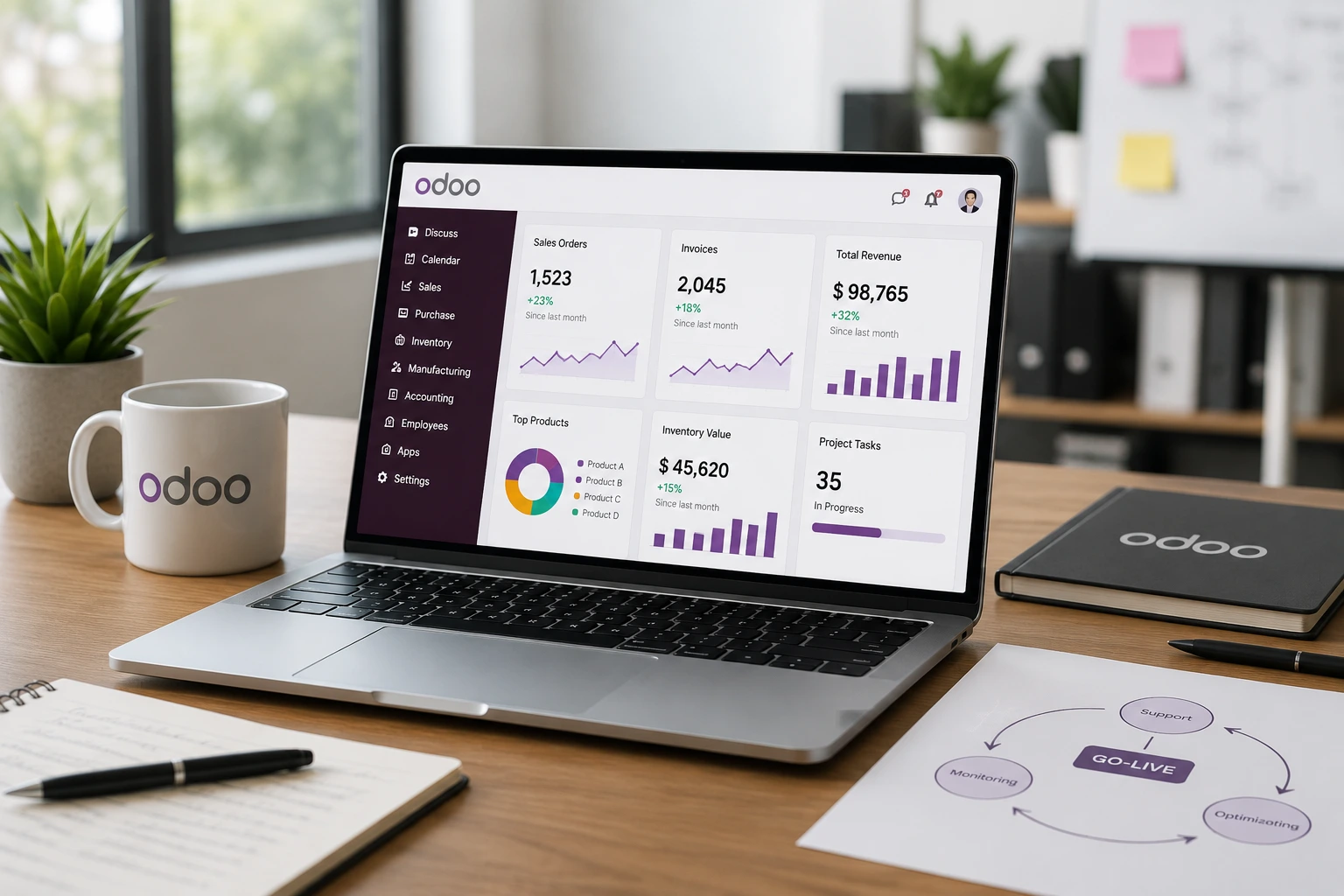
What Happens After Odoo ERP Go-Live
Going live with an ERP system is a significant milestone, but it does not mark the end of the implementation journey. In many ways, the post-go-live phase is where businesses begin to realize the actual value of their ERP investment. User adoption, workflow optimization, data validation, and ongoing support all play critical roles in determining long-term success.
An experienced Odoo ERP implementation company understands that a successful deployment extends far beyond technical configuration. Post-implementation support ensures that employees adapt to new processes, operational challenges are resolved quickly, and the ERP environment continues to align with evolving business requirements.
In this guide, we explore what businesses should expect after Odoo ERP goes live, the common challenges that arise, and the best practices for achieving a smooth transition.
What Happens Immediately After Odoo ERP Go-Live?
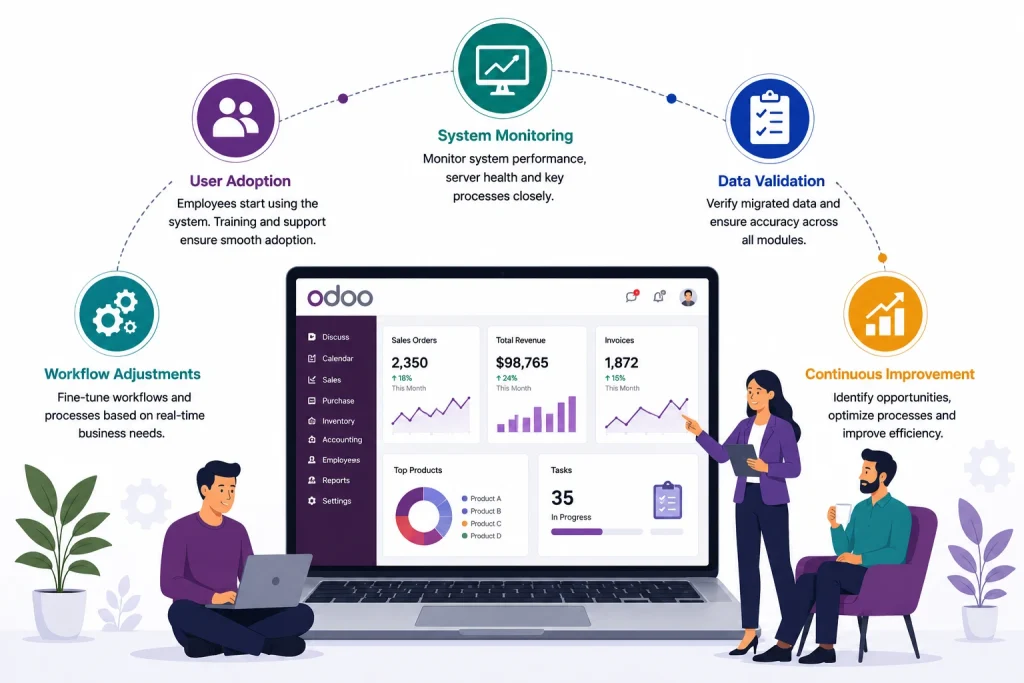
After Odoo ERP goes live, businesses typically focus on user adoption, system monitoring, data validation, workflow adjustments, and continuous improvement. A professional Odoo ERP implementation company helps organizations manage these activities to ensure operational stability and maximize the long-term value of the ERP system.
The first few weeks after deployment are often considered the most important period, as employees begin using the new platform in real business scenarios and organizations identify opportunities for optimization.
User Adoption Becomes the Primary Focus
Technology alone does not guarantee ERP success. Employees must understand how to use the system effectively and integrate new workflows into their daily operations.
Many businesses experience an adjustment period where teams transition from spreadsheets, disconnected applications, or legacy software to a unified ERP environment. During this phase, additional training sessions, user documentation, and ongoing support help employees become more confident with the platform.
An Odoo ERP implementation company typically provides post-go-live assistance to address user questions, improve adoption rates, and ensure that business processes operate as intended.
Data Validation and Accuracy Checks
Once the system is live, businesses should verify that all migrated information is accurate and complete. Customer records, inventory data, financial transactions, supplier information, and employee details must align with existing business operations.
Common validation activities include:
- Reviewing customer and vendor information
- Verifying inventory quantities and stock movements
- Checking accounting balances and financial reports
- Confirming employee and payroll data
- Testing automated workflows and approval processes
Identifying and correcting data issues early helps prevent operational disruptions and improves confidence in the new system.
Performance Monitoring After Deployment
System performance should be monitored closely during the initial weeks following implementation. Businesses need to ensure that the ERP platform can support daily activities without delays or technical issues.
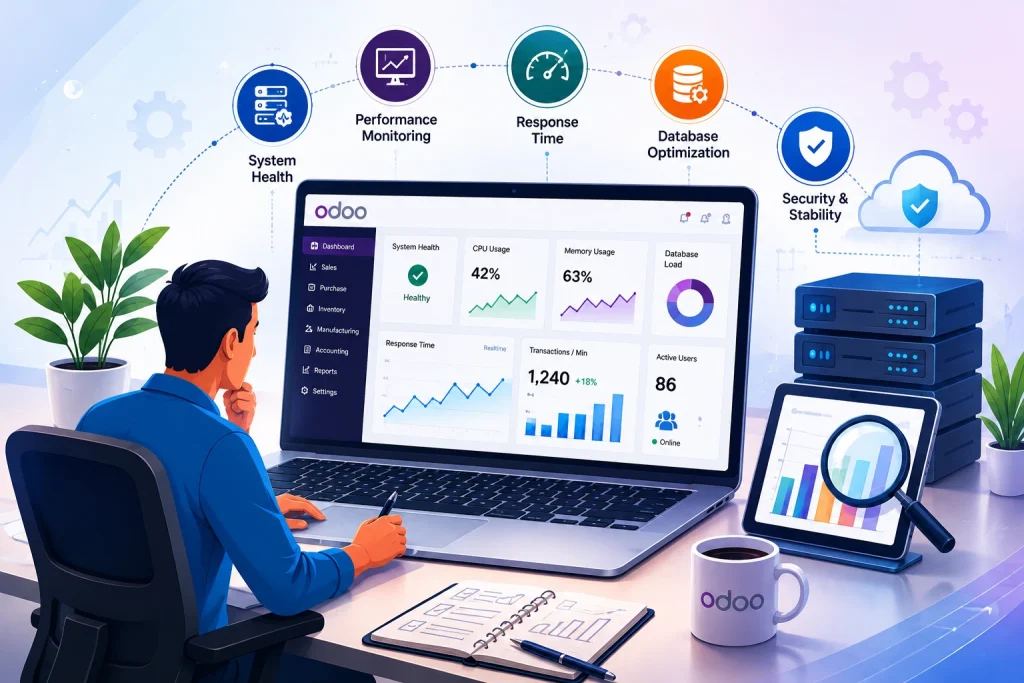
Performance monitoring typically includes:
- Response times for critical processes
- Database performance and optimization
- User access and permission management
- Integration reliability with third-party applications
- Server resource utilization and system stability
Organizations working with an experienced Odoo ERP implementation company often receive technical support and monitoring services to maintain consistent performance during this transition period.
Workflow Optimization and Process Improvements
Go-live does not mean every workflow is permanently finalized. Real-world usage often reveals opportunities for refinement and optimization.
Departments may identify:
- Additional automation requirements
- Improved approval workflows
- Better reporting structures
- New dashboard requirements
- Opportunities to eliminate manual tasks
Businesses that continuously optimize their ERP environment generally achieve greater efficiency and higher returns on their implementation investment.
Common Challenges After Odoo ERP Go-Live
Most organizations experience some challenges during the post-implementation phase. Understanding these issues in advance helps businesses prepare more effectively.
Employee Resistance to Change
Employees may initially prefer familiar systems and manual processes. Continuous communication, training, and management support are essential for encouraging adoption and building confidence in the new platform.
Minor Data Inconsistencies
Data migration processes are rarely perfect. Small discrepancies in inventory records, financial information, or customer data can occur and should be addressed quickly through validation exercises.
Process Adjustments
Business operations often evolve after implementation. Some workflows may require additional customization or configuration changes to better support day-to-day activities.
Integration Challenges
Organizations that connect Odoo with third-party systems, eCommerce platforms, logistics providers, or payment gateways should continuously monitor integration performance to ensure reliable data exchange.
An experienced Odoo ERP implementation company helps businesses resolve these challenges efficiently while minimizing disruptions to ongoing operations.
How an Odoo ERP Implementation Company Supports Businesses After Go-Live
Post-go-live support is one of the most valuable services provided by an implementation partner. Successful ERP projects depend on continuous guidance rather than one-time deployment activities.
User Training and Knowledge Transfer
Implementation teams provide additional training sessions to help employees understand advanced features, best practices, and process improvements as they become more familiar with the system.
Technical Support and Troubleshooting
Unexpected issues can arise during real-world operations. Professional support ensures that technical problems are resolved quickly before they affect business continuity.
Performance Optimization
Database tuning, server optimization, and workflow improvements help maintain system performance as transaction volumes increase.
Future Module Expansion
Many businesses begin with core modules and expand their ERP environment over time. An Odoo ERP implementation company can help organizations introduce additional capabilities such as manufacturing, HR, project management, or customer relationship management as business needs evolve.
Best Practices for a Successful Post-Go-Live Phase
Organizations that achieve the greatest ERP success often follow several important practices after deployment.
Continue Employee Training
Training should not end on launch day. Ongoing education helps employees discover new features, improve productivity, and maximize system utilization.
Monitor Key Performance Indicators
Businesses should track metrics such as:
- User adoption rates
- Process completion times
- Inventory accuracy
- Financial reporting efficiency
- Customer service improvements
These measurements help determine whether the ERP system is delivering expected business outcomes.
Collect User Feedback
Employees working with the system every day provide valuable insights into areas that require improvement. Regular feedback sessions support continuous optimization efforts.
Plan for Continuous Improvement
ERP implementation is an ongoing business transformation initiative rather than a one-time technology project. Organizations that continuously refine processes often achieve greater operational efficiency over time.
When Should Businesses Consider Additional Customization?
Not every requirement becomes visible during the initial implementation phase. As users gain experience with the platform, businesses may identify opportunities for additional customization.
Potential indicators include:
- Repetitive manual processes
- New reporting requirements
- Industry-specific workflows
- Growing operational complexity
- Expansion into new markets or business units
An experienced Odoo ERP implementation company can evaluate these requirements and determine whether standard functionality or custom development provides the best long-term solution.
Frequently Asked Questions
Most businesses require intensive support during the first few weeks after deployment, although optimization activities and user training may continue for several months depending on business complexity.
User adoption, data validation, workflow adjustments, and third-party integration issues are among the most common post-implementation challenges organizations experience.
Post-go-live support helps businesses resolve issues quickly, improve employee adoption, optimize processes, and ensure that the ERP system delivers long-term value.
Yes. Many organizations begin with core modules and gradually expand their ERP environment as business requirements evolve and operational maturity increases.
Conclusion
The period following Odoo ERP go-live is critical for long-term business success. User adoption, data accuracy, workflow optimization, and continuous support all contribute to maximizing the value of an ERP investment.
Businesses that partner with an experienced Odoo ERP implementation company benefit from structured post-go-live support, technical expertise, and ongoing guidance that helps maintain operational stability while enabling future growth. By treating ERP implementation as a continuous improvement process rather than a one-time deployment, organizations can achieve greater efficiency, stronger collaboration, and sustainable business transformation.


One Comment