
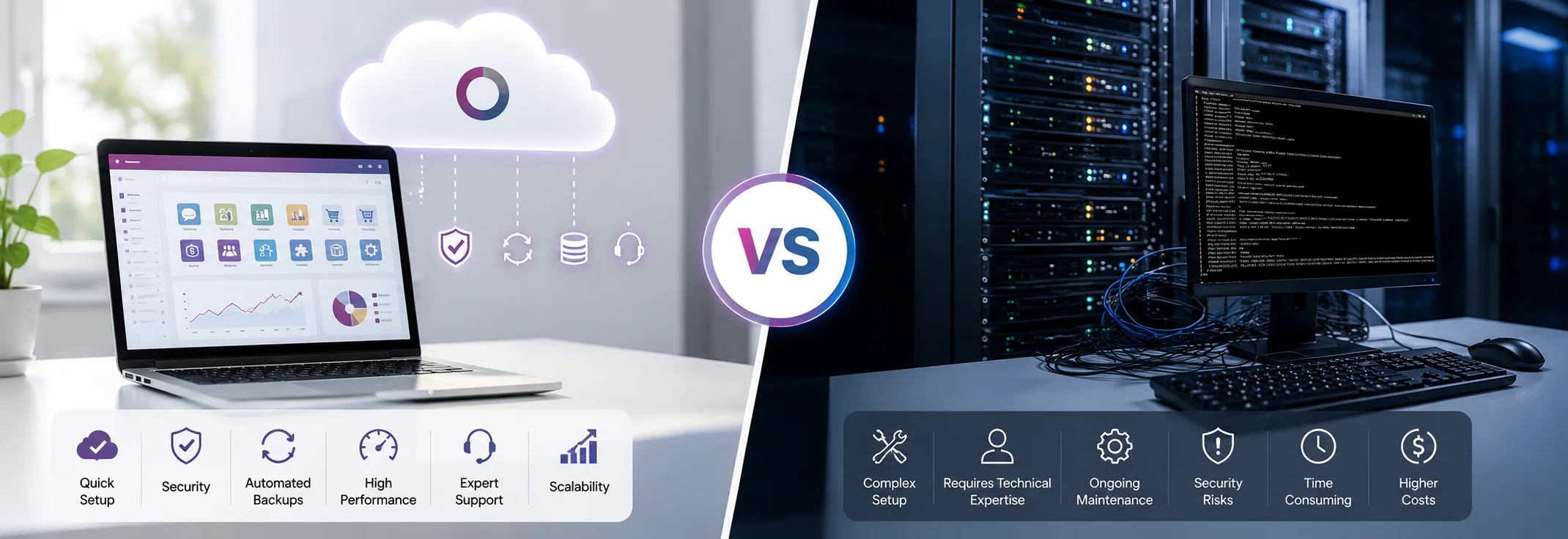
Managed Odoo Hosting vs Self-Hosting: Which Option Is Better?
Choosing the right hosting approach is one of the most important decisions businesses make when implementing Odoo ERP. The hosting environment directly affects application performance, security, scalability, maintenance requirements, and long-term operating costs.
Many organizations face a common question: should they manage their own Odoo infrastructure or rely on a managed hosting solution? While self-hosting offers complete control over the server environment, managed hosting provides expert maintenance, security management, and infrastructure optimization without requiring an in-house technical team.
The right option depends on business goals, available resources, technical expertise, and growth plans. Understanding the differences helps organizations make informed decisions that support long-term operational success.
In this guide, we compare managed Odoo hosting and self-hosting to help businesses determine which approach best fits their requirements.
Managed Odoo Hosting vs Self-Hosting
Managed Odoo hosting is generally the better option for businesses that want professional support, automated backups, stronger security, and reduced infrastructure management responsibilities. Self-hosting provides greater control and customization but requires technical expertise to manage servers, updates, monitoring, and disaster recovery.
What Is Managed Odoo Hosting?
Managed Odoo hosting is a service where a specialized provider handles the infrastructure, maintenance, monitoring, backups, security updates, and performance optimization required to run Odoo efficiently.
Businesses can focus on their operations while the hosting provider manages:
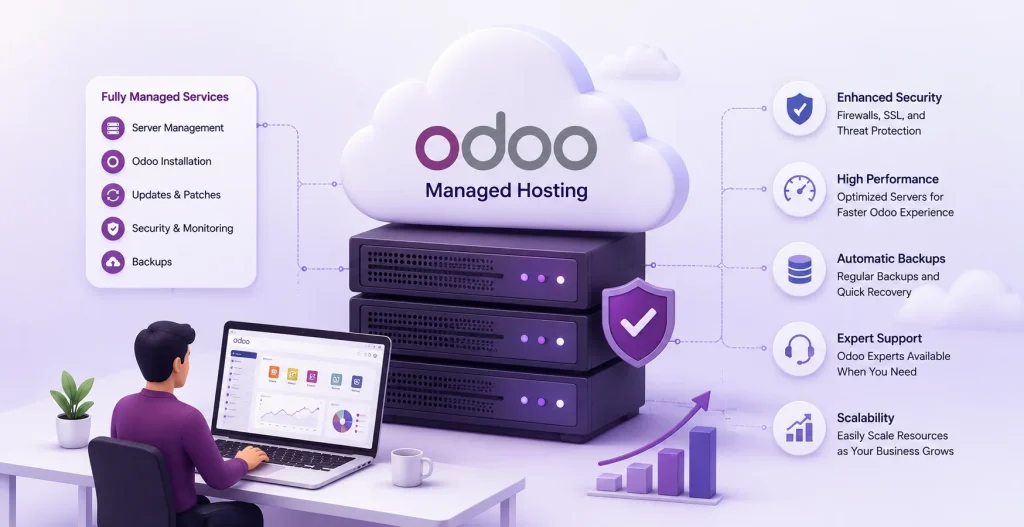
- Server administration
- Security patches and updates
- Database optimization
- Automated backups
- Resource scaling
- Performance monitoring
- Technical troubleshooting
This approach reduces operational complexity and allows organizations to leverage infrastructure that is specifically optimized for Odoo workloads.
What Is Self-Hosting in Odoo?
Self-hosting means the business manages its own Odoo servers, either on-premise or through cloud providers such as AWS, Azure, or DigitalOcean.
The organization becomes responsible for:
- Server setup and configuration
- Operating system updates
- Security implementation
- Backup management
- Monitoring and maintenance
- Database administration
- Performance tuning
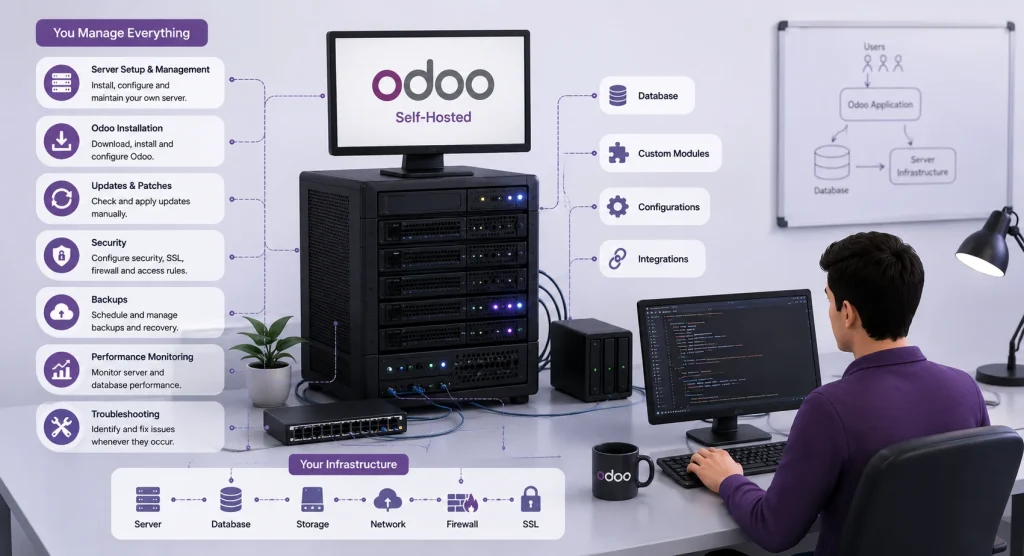
While self-hosting offers complete control, it also increases technical responsibilities and ongoing maintenance requirements.
Performance and Reliability
Application performance directly impacts productivity across departments that rely on Odoo for daily operations.
Managed Hosting
Managed providers typically optimize infrastructure specifically for Odoo by:
- Configuring PostgreSQL databases efficiently
- Managing worker processes
- Allocating appropriate server resources
- Monitoring application performance continuously
- Implementing caching and storage optimizations
This results in consistent performance and higher availability.
Self-Hosting
Performance depends entirely on internal expertise. Poor server configuration, inadequate resources, or insufficient monitoring can create bottlenecks that affect business operations.
Organizations with experienced system administrators may achieve excellent performance, but maintaining that environment requires continuous effort.
Security and Backup Management
ERP systems contain critical business information, including financial records, customer data, inventory information, and employee details. Security should therefore remain a top priority.
Managed Hosting Advantages
Managed hosting providers generally include:
- SSL encryption
- Firewall protection
- Automated security updates
- Daily backups
- Disaster recovery plans
- Continuous infrastructure monitoring
These measures help reduce security risks and improve business continuity.
Self-Hosting Responsibilities
With self-hosting, organizations must implement and maintain:
- Security policies
- Patch management
- Backup procedures
- Access controls
- Recovery strategies
- Monitoring systems
Failure to maintain these systems properly can expose businesses to operational and security risks.
Scalability and Business Growth
Business requirements evolve over time. Additional users, modules, and data volumes increase infrastructure demands.
Managed hosting allows organizations to:
- Upgrade resources quickly
- Add new departments without disruption
- Support multiple companies
- Expand internationally
- Deploy additional Odoo modules easily
Self-hosted environments can also scale effectively, but resource planning, infrastructure changes, and performance optimization remain internal responsibilities.
Cost Considerations
Cost is often one of the primary factors influencing hosting decisions.
Managed Hosting Costs
Managed hosting generally involves predictable monthly expenses that include:
- Infrastructure
- Maintenance
- Monitoring
- Technical support
- Security management
- Backup services
Although monthly fees may appear higher, businesses avoid hiring dedicated infrastructure specialists.
Self-Hosting Costs
Self-hosting may reduce direct hosting expenses but introduces additional costs such as:
- System administration
- Security management
- Server maintenance
- Monitoring tools
- Backup infrastructure
- Downtime recovery
The total cost of ownership often depends on the availability of internal technical resources.
Which Option Is Best for Small Businesses?
Small and medium-sized businesses typically benefit more from managed Odoo hosting.
Without dedicated IT teams, managed environments provide:
- Faster deployment
- Lower operational risk
- Reduced maintenance responsibilities
- Better security practices
- Professional support
Self-hosting may be appropriate for organizations with strong technical teams and highly specific infrastructure requirements.
When Does Self-Hosting Make Sense?
Self-hosting can be a suitable option when businesses require:
- Complete infrastructure control
- Highly customized server environments
- Internal compliance requirements
- Dedicated in-house DevOps teams
- Integration with existing enterprise infrastructure
Organizations that possess sufficient technical expertise may prefer the flexibility offered by self-managed deployments.
Frequently Asked Questions
Managed hosting providers typically implement professional security measures, automated updates, and continuous monitoring, which often makes them more secure for businesses without dedicated infrastructure teams.
Yes. Many organizations move to managed hosting as they grow and require improved performance, scalability, and operational support.
The answer depends on internal technical capabilities. Businesses without dedicated IT resources often find managed hosting more cost-effective because it reduces maintenance costs and minimizes downtime risks.
Conclusion
Both managed Odoo hosting and self-hosting offer distinct advantages. Self-hosting provides complete control but demands significant technical expertise and ongoing maintenance. Managed hosting reduces infrastructure responsibilities and delivers optimized environments that support performance, security, and business continuity.
For many growing organizations, managed hosting offers the most practical balance between reliability, scalability, and operational efficiency. Choosing the right hosting strategy helps businesses maximize the long-term value of their Odoo ERP investment while minimizing infrastructure challenges.

