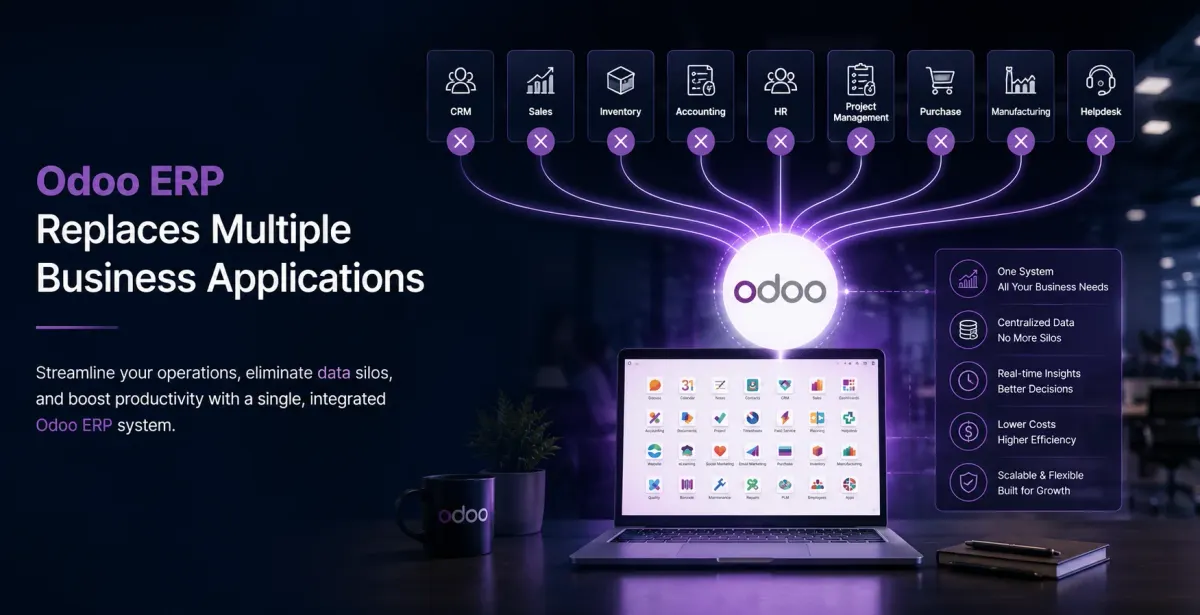
Odoo Partner Selection Checklist for Business Owners
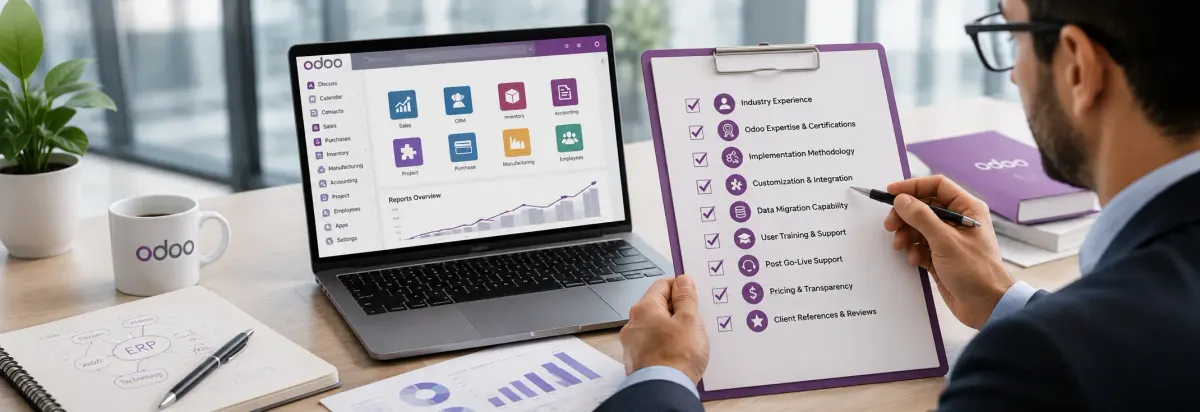
Odoo Partner Selection Checklist for Business Owners
Adopting an integrated ERP platform can significantly improve how businesses manage operations, share information, and prepare for future expansion. The success of an Odoo project depends not only on the software itself but also on the expertise, methodology, and support provided by the implementation partner.
Many organizations focus heavily on pricing while overlooking factors such as industry experience, customization capabilities, user training, and post-go-live support. Choosing the wrong partner can lead to project delays, budget overruns, poor user adoption, and operational disruptions.
A structured selection process helps business owners evaluate potential partners more effectively and reduces the risks associated with ERP implementation. This checklist outlines the key areas organizations should consider before making a decision.
Why Choosing the Right Odoo Partner Matters
An implementation partner plays a critical role throughout the ERP journey, from business analysis and system configuration to data migration, training, and ongoing support.
The right partner helps organizations:
- Align technology with business objectives
- Reduce implementation risks
- Improve user adoption
- Deliver projects within realistic timelines
- Support future business growth
- Provide long-term technical assistance
Effective ERP projects are built on a combination of technical expertise, operational understanding, and the ability to guide organizations through process changes and user adoption initiatives
Define Your Business Requirements First
Before approaching potential implementation partners, organizations should clearly define their business goals and operational challenges.
Business owners should identify:
- Existing process inefficiencies
- Required Odoo modules
- Integration requirements
- Reporting expectations
- Growth objectives
- User adoption goals
Having well-documented requirements enables more productive discussions and helps partners propose solutions that match business needs rather than generic ERP configurations.
Business Requirement Checklist
✓ Define project objectives
✓ Identify departments involved
✓ List current software systems
✓ Document operational challenges
✓ Establish implementation priorities
✓ Determine expected business outcomes
Evaluate Odoo Experience and Technical Expertise
Not all implementation providers have the same level of Odoo expertise. Businesses should assess both technical capabilities and practical implementation experience.
Important factors include:
Years of Odoo Experience
Partners with extensive implementation experience often have established methodologies and proven processes.
Module Expertise
Organizations should confirm that the partner has experience with relevant Odoo applications, including:
- Accounting
- Inventory
- Manufacturing
- CRM
- Human Resources
- Sales
- Purchasing
- Project Management
Technical Capabilities
A qualified implementation team should be able to handle:
- Custom module development
- Third-party integrations
- Data migration
- Workflow automation
- Performance optimization
Technical expertise becomes increasingly important as business requirements grow more complex.
Assess Industry-Specific Knowledge
ERP implementations often require an understanding of industry processes and regulatory requirements.
A manufacturing company may have different priorities than a retail business or a service organization.
Business owners should ask:
- Has the partner worked with similar businesses?
- Do they understand industry workflows?
- Can they recommend best practices?
- Have they handled comparable implementation challenges?
Industry experience helps reduce implementation risks and improves project outcomes.
Review Customization and Integration Capabilities
Most businesses require some level of customization to align ERP systems with their operational processes.
Organizations should evaluate whether potential partners can support:
Custom Workflows
Business processes often require automation rules and approval mechanisms that differ from standard configurations.
Third-Party Integrations
Odoo implementations may need connections with:
- Payment gateways
- Shipping platforms
- CRM systems
- eCommerce solutions
- Business intelligence tools
Reporting Requirements
Management teams frequently require custom dashboards and reports to support decision-making.
The ability to deliver these capabilities is an important factor during partner evaluation.
Understand Their Implementation Methodology
A structured implementation methodology reduces project uncertainty and improves communication throughout the engagement.
Business owners should understand how partners approach:
Discovery and Requirement Analysis
Initial workshops help define project scope, priorities, and business objectives.
System Configuration
Odoo modules should be configured according to documented requirements and operational workflows.
Data Migration
Accurate migration of business data is critical for maintaining operational continuity.
Testing and Validation
User acceptance testing helps identify issues before deployment.
Go-Live Support
Implementation partners should provide assistance during the transition period to minimize disruptions.
A transparent methodology demonstrates professionalism and project maturity.
Evaluate User Training and Change Management
Technology adoption depends heavily on employee engagement and training.
Businesses should confirm whether implementation partners provide:
- User training sessions
- Documentation
- Process guides
- Knowledge transfer activities
- Post-training support
Employees who understand the system are more likely to embrace new processes and use the ERP platform effectively.
Training should be considered an essential component rather than an optional service.
Check Post Go-Live Support Services
ERP implementation does not end when the system goes live.
Businesses often require ongoing support for:
- Issue resolution
- System enhancements
- Additional module implementations
- User assistance
- Performance improvements
- Future integrations
Business owners should clarify:
Support Availability
- Business hours support
- Emergency assistance
- Dedicated account managers
Maintenance Services
- System updates
- Security improvements
- Backup procedures
- Performance monitoring
Long-term support capabilities are important when selecting an implementation partner.
Compare Pricing Beyond Initial Costs
Selecting a partner based solely on price can create problems later in the project.
Organizations should evaluate:
- Project scope transparency
- Customization costs
- Training services
- Support agreements
- Future maintenance expenses
A lower initial quote may exclude essential services that become additional costs during implementation.
Businesses should focus on overall value rather than upfront pricing alone.
Questions Every Business Owner Should Ask
Before selecting an Odoo implementation partner, consider asking the following questions:
How many Odoo projects have you completed?
Do you have experience in our industry?
What implementation methodology do you follow?
How do you handle data migration?
What training services do you provide?
What post-go-live support options are available?
How do you approach customizations and future upgrades?
The answers provide valuable insights into technical capabilities, business understanding, and long-term support commitments.
Why Long-Term Partnership Matters
ERP systems evolve as businesses grow and operational requirements change.
Many organizations continue working with their implementation partners after the initial deployment to:
- Introduce new modules
- Optimize workflows
- Expand integrations
- Improve reporting capabilities
- Support organizational growth
Businesses planning a successful digital transformation often work with experienced Odoo ERP implementation services that can provide both implementation expertise and long-term strategic support.
Building a long-term relationship helps ensure that technology investments continue delivering value as the organization evolves.
Conclusion
Choosing an Odoo implementation partner is a strategic business decision that influences project outcomes, operational efficiency, and long-term scalability.
A structured evaluation process helps organizations move beyond pricing discussions and focus on experience, methodology, technical capabilities, training, and support services.
By following a comprehensive partner selection checklist, business owners can reduce implementation risks and establish a stronger foundation for successful ERP adoption and future business growth.
Frequently Asked Questions
Organizations should evaluate experience, industry expertise, implementation methodology, customization capabilities, training services, and post-go-live support.
Yes. Industry knowledge helps partners understand operational requirements, compliance considerations, and best practices relevant to specific business environments.
ERP systems require ongoing maintenance, enhancements, user support, and future integrations. Reliable post-go-live services help businesses maximize their technology investments.
No. Lower costs may exclude critical services such as training, support, and customizations. Businesses should consider overall value and long-term partnership capabilities.
Clearly defining requirements, evaluating partner expertise, establishing realistic expectations, and investing in user training help minimize implementation risks and improve project success.