Signs Your Business Is Ready for Odoo ERP Implementation
Businesses are typically ready for Odoo ERP implementation when manual processes, disconnected software, limited reporting capabilities, and operational complexity begin affecting growth. An integrated ERP platform helps organizations centralize data, automate workflows, and support future expansion.
Odoo ERP implementation becomes relevant when existing processes no longer support business growth. Spreadsheets, standalone applications, and manual workflows may work in the early stages, but expanding organizations often require a connected platform that provides visibility, automation, and scalability.
Understanding the signs that indicate ERP readiness helps business leaders make informed decisions before operational challenges begin affecting productivity, customer satisfaction, and profitability.
Why Businesses Outgrow Traditional Systems
Many organizations operate with multiple software tools for accounting, inventory, sales, purchasing, customer management, and project coordination. While these solutions may function independently, they often create information silos that make collaboration difficult.
Employees spend additional time entering data into multiple systems, managers struggle to obtain real-time reports, and business decisions rely on fragmented information.
An ERP platform like Odoo addresses these challenges by bringing critical business functions into a single connected environment.
The following indicators commonly suggest that a business is ready for Odoo ERP implementation.
| Sign | Business Impact | How Odoo Helps |
| Multiple software tools | Data silos and duplicate work | Unified business platform |
| Manual processes | Lower productivity | Workflow automation |
| Limited reporting | Slow decision-making | Real-time dashboards |
| Business expansion | Operational complexity | Multi-company management |
| Poor collaboration | Communication gaps | Shared business data |
Your Teams Use Multiple Software Applications Every Day
Using separate tools for accounting, inventory, CRM, purchasing, HR, and project management increases operational complexity.
Common challenges include:
- Duplicate data entry
- Inconsistent information between departments
- Higher software subscription costs
- Limited reporting capabilities
- Communication gaps across teams
When employees spend more time switching between applications than performing value-generating work, it may be time to consider an integrated ERP solution.
Odoo provides a unified environment where departments operate on shared data and standardized workflows.
Manual Processes Are Slowing Down Business Operations
Manual approvals, spreadsheet-based reporting, and repetitive administrative tasks often become bottlenecks as organizations grow.
Examples include:
- Manual invoice processing
- Spreadsheet inventory tracking
- Email-based approval systems
- Handwritten production schedules
- Separate customer databases
These processes increase the risk of errors and reduce operational efficiency.
Odoo implementation enables workflow automation across multiple business functions, helping organizations improve productivity while maintaining process consistency.
Real-Time Business Information Is Difficult to Access
Effective business decisions rely on timely and reliable operational data.
If obtaining information requires combining reports from multiple systems or requesting updates from different departments, operational visibility becomes limited.
Common issues include:
- Delayed financial reports
- Inaccurate inventory information
- Lack of sales forecasting
- Limited project visibility
- Difficulty monitoring business performance
Odoo centralizes data across departments, enabling real-time dashboards and reporting capabilities that support faster and more informed decision-making.
Inventory Management Has Become More Complex
Growing businesses often experience challenges such as:
- Stock shortages
- Excess inventory
- Manual warehouse processes
- Poor product traceability
- Delayed order fulfillment
These issues can directly impact customer satisfaction and revenue generation.
Odoo’s inventory management capabilities provide better control over warehouses, procurement activities, stock movements, and demand planning, helping organizations maintain operational efficiency as they scale.
Your Business Is Expanding Into New Markets or Locations
Expansion introduces additional operational requirements.
Organizations may need to manage:
- Multiple warehouses
- Multiple companies
- Different tax regulations
- New sales channels
- Larger workforces
Traditional systems frequently struggle to accommodate these changes.
Odoo supports multi-company and multi-location operations within a single platform, making it suitable for businesses planning long-term growth and expansion.
Customer Information Is Spread Across Different Systems
Customer data plays a critical role in sales, support, and long-term relationship management.
However, many organizations maintain customer information across:
- Spreadsheets
- Email platforms
- CRM applications
- Accounting systems
- Service management tools
This fragmentation creates inconsistencies and limits visibility into customer interactions.
An integrated ERP approach enables teams to access unified customer information, improving collaboration between sales, finance, operations, and support departments.
Reporting Takes Too Much Time
When management reports require manual data collection and spreadsheet consolidation, decision-making becomes slower and less reliable.
Businesses often experience challenges such as:
- Weekly manual reporting processes
- Inconsistent KPI measurements
- Delayed financial visibility
- Limited forecasting capabilities
- Difficulty identifying operational trends
Odoo provides built-in reporting and dashboard tools that reduce manual effort while improving data accuracy.
Real-time business intelligence enables organizations to respond more effectively to changing market conditions.
Existing Software Cannot Support Future Growth
Software solutions that worked during the early stages of business development may eventually become limitations.
Signs include:
- System performance issues
- Limited customization options
- Growing maintenance costs
- Inability to integrate new applications
- Lack of process automation
Scalable ERP platforms help businesses prepare for future growth rather than continuously replacing individual tools.
Odoo’s modular structure allows organizations to implement the functionality they need today while expanding capabilities over time.
Departments Need Better Collaboration
Disconnected systems frequently create communication challenges between teams.
For example:
- Sales may not have visibility into inventory levels.
- Finance may wait for operational updates before processing invoices.
- Project teams may struggle to track resource availability.
- Procurement teams may lack demand forecasts.
Integrated business processes improve collaboration by providing shared access to accurate information.
Odoo supports cross-functional workflows that help departments work together more efficiently.
Digital Transformation Has Become a Strategic Priority
Modern businesses increasingly focus on:
- Process automation
- Data-driven decision-making
- Customer experience improvements
- Operational scalability
- Technology modernization
ERP implementation often serves as the foundation for broader digital transformation initiatives.
Organizations that invest in integrated systems can establish stronger operational frameworks that support sustainable business growth.
What Businesses Should Do Before Implementing Odoo ERP
Successful implementation begins with preparation.
Organizations should consider:
Evaluate Existing Processes
Document current workflows and identify inefficiencies that need improvement.
Define Business Objectives
Determine whether goals include automation, reporting improvements, inventory optimization, or scalability.
Prioritize Core Modules
Focus on the departments that will deliver the greatest operational value during the initial implementation phase.
Prepare Data Migration Plans
Accurate data migration supports smoother implementation and reduces operational disruptions.
Involve Key Stakeholders
Department managers and end users should participate in planning activities to ensure successful adoption.
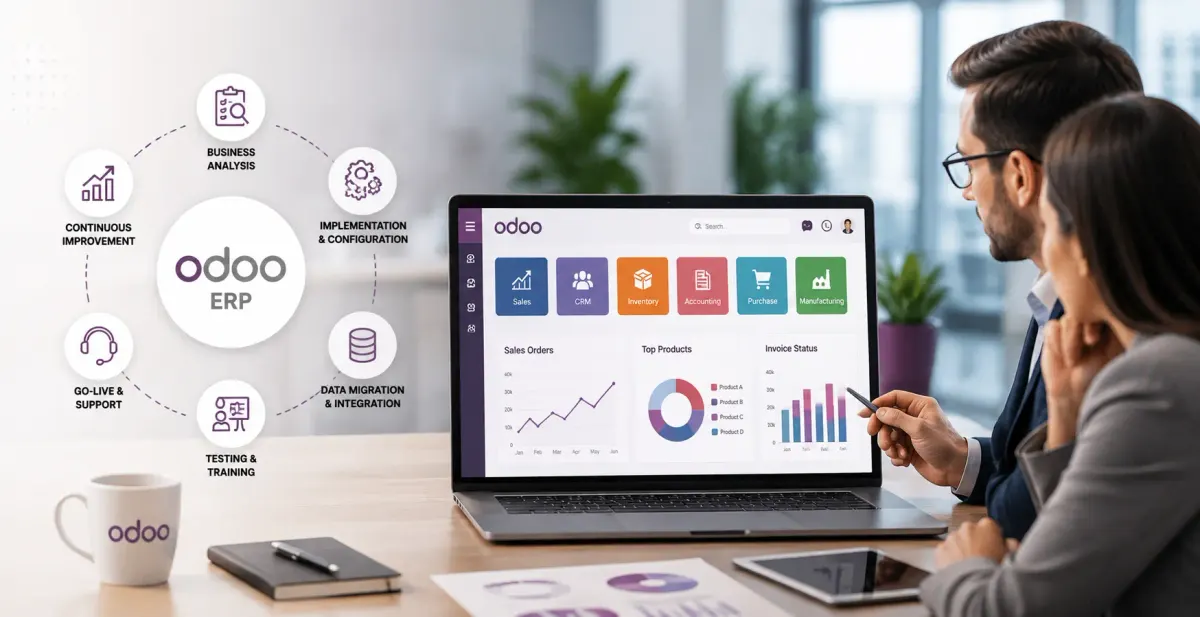
How an Odoo ERP Implementation Partner Supports Business Growth
ERP implementation involves more than software deployment.
Successful projects require:
- Business process analysis
- Module configuration
- Workflow optimization
- Data migration
- User training
- Testing and deployment support
- Post-go-live assistance
Working with an experienced implementation team helps organizations align technology with operational objectives and long-term growth plans.
Conclusion
Businesses typically reach a point where disconnected systems and manual processes begin limiting efficiency and scalability.
Multiple software applications, slow reporting, operational bottlenecks, and expanding business requirements often indicate that an integrated ERP approach is becoming necessary.
Recognizing these signs early enables organizations to plan implementation strategically rather than reacting to operational challenges after they emerge. Odoo ERP provides a flexible platform that connects departments, automates workflows, and supports sustainable business growth, making it a practical option for organizations preparing for their next stage of development.