

If you are evaluating Odoo for your business, the implementation proposal is more important than the headline price.
A good proposal should make it clear what the implementation company will deliver, what your business needs to provide, what is included, what is excluded, and how changes will be handled.
Two Odoo implementation company can recommend similar solutions but provide very different proposals because their scope, assumptions, deliverables, timelines, and support commitments may differ.
So before accepting an Odoo implementation proposal, do not look at the final quotation alone.
Look at what the quotation actually covers.
If you are evaluating an implementation partner, visit our Odoo ERP implementation company page to discuss your business requirements and implementation needs.
Before accepting a proposal, review the following areas carefully.
Applications, Users and Business Scope
The proposal should clearly identify the Odoo applications, users, departments, companies, locations, and business areas covered by the implementation.
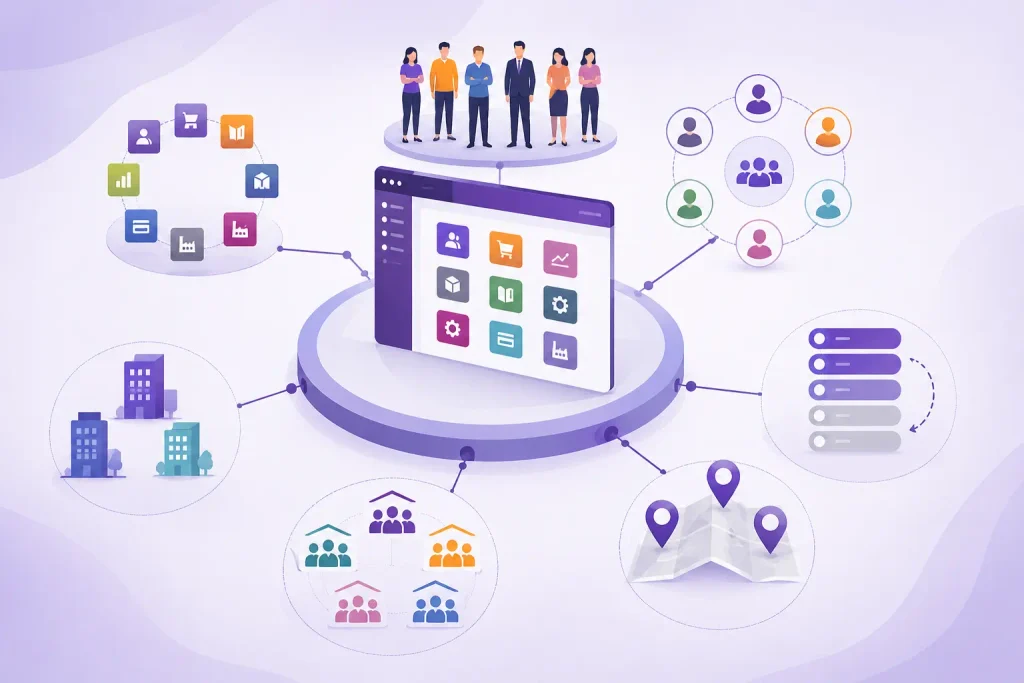
- Odoo applications included
- Users or user groups covered
- Companies and locations included
- Departments involved
- Applications planned for later phases
Business Requirements, Processes and Deliverables
The proposal should connect your business requirements with the Odoo solution being proposed.
Simply listing applications is not enough. The proposal should show which important business processes are being addressed and what will be delivered for each requirement.
A useful way to review the scope is:
Business requirement → Odoo solution → Deliverable
Make sure the proposal reflects the workflows your business actually needs rather than only listing the applications being implemented.
Configuration and Customization
The proposal should distinguish between standard Odoo configuration and custom development.
For any customization, check:
- What is being developed?
- Which business requirement does it address?
- Why is customization required?
- Is testing included?
- Who is responsible for future maintenance?
This makes it easier to understand what is part of the standard implementation and what requires additional development.
Data Migration and Third-Party Integrations
If existing business data needs to move into Odoo, the proposal should define the migration scope.
- Which records will be migrated
- Whether historical data is included
- Who prepares the source data
- How the data will be validated
- How additional migration requirements will be handled
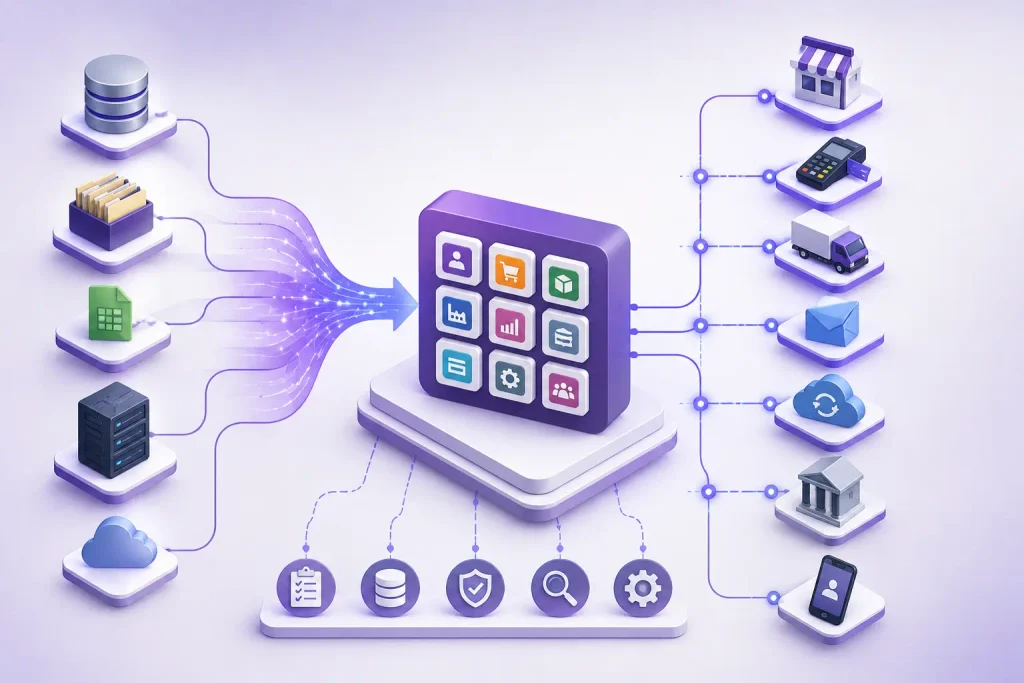
The same level of clarity is needed for third-party integrations.
The proposal should identify the systems being connected, the information exchanged, the integration scope, testing responsibilities, and any ongoing maintenance requirements.
Reports, Workflows, Testing and Training
The proposal should specify which reports, dashboards, approval workflows, testing activities, and training services are included.
Ask:
- Which reports and dashboards will be delivered?
- Which approval workflows are covered?
- What testing is included?
- Who participates in user acceptance testing?
- Which users receive training?
- What training materials or sessions are provided?
This prevents important requirements from being assumed rather than formally included.
Go-Live and Post-Go-Live Support
The proposal should explain what happens when the system goes live and what support continues afterward.
Check:
- Go-live assistance
- Issue resolution
- User support
- Support period
- Support channels
- Response expectations
- Fixes included
- Additional development handled separately
You should be able to clearly identify where implementation ends and ongoing support begins.
Timeline, Responsibilities and Dependencies
A proposal should provide more than a final go-live date.
Look for key milestones such as:
Requirements → Configuration → Development → Migration → Testing → Training → Go-Live
It should also identify what your team must provide, such as business requirements, data, system access, approvals, testing participation, and user availability.
This makes project responsibilities and potential dependencies clear from the beginning.
Exclusions and Change Requests
A strong proposal should clearly state what is not included.
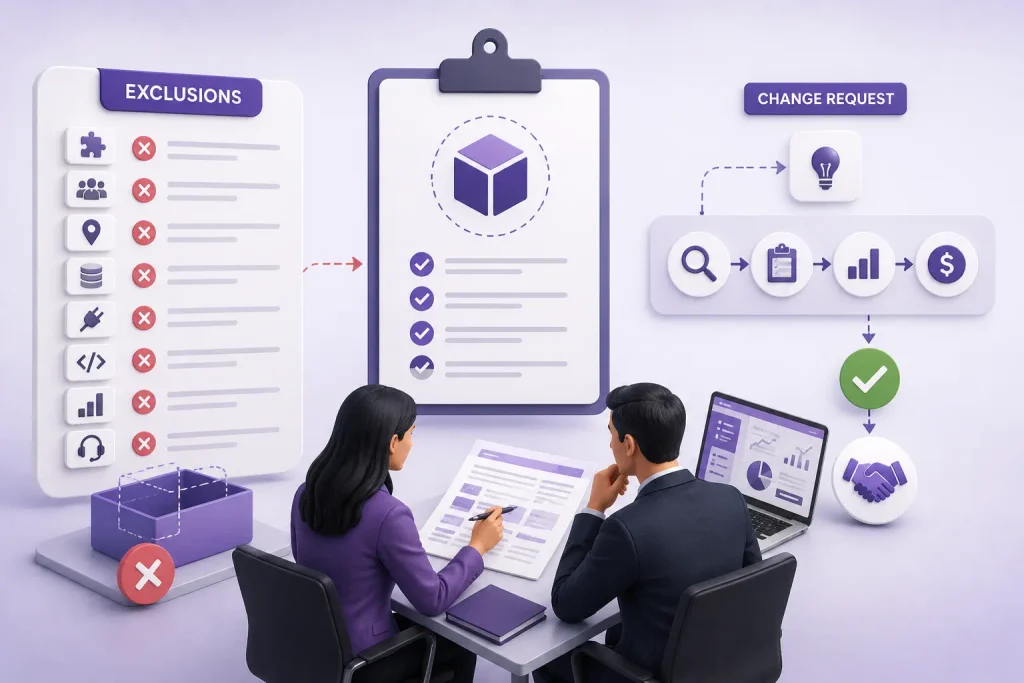
- Additional applications
- Additional users or locations
- Extra migration work
- New integrations
- Additional customization
- Additional reports
- Extended training
- Additional support
The proposal should also explain how new requirements are handled.
Ask:
What qualifies as a change request, how is its impact assessed, and how will additional work be approved and priced?
Clear exclusions and change-request terms help you understand the actual scope of the proposal before accepting it.
Why Can Two Odoo Implementation Proposals Be Different?
Two Odoo implementation proposals can differ significantly even when both companies are implementing the same ERP.
The difference often comes down to what each company has included in the project scope.
For example, one proposal may include data migration, integrations, user training, testing, and post-go-live support, while another may treat some of these as additional services.
Before comparing the quoted amount, check whether both proposals cover the same:
Scope → Deliverables → Responsibilities → Exclusions → Timeline → Support
Therefore, the lower quotation does not automatically mean the lower overall project cost.
What matters is understanding exactly what you will receive for the quoted amount.
What Should You Check Before Accepting an Odoo Implementation Proposal?
Before signing an Odoo implementation proposal, use this quick checklist to confirm that the important terms are clearly defined.
| Area | What to verify |
| Scope | What exactly will be implemented? |
| Deliverables | What will the implementation company provide? |
| Customization | What development is included? |
| Migration | Which data will be migrated and validated? |
| Integrations | Which external systems are included? |
| Testing & Training | What testing and user training are covered? |
| Go-Live & Support | What assistance is included during and after launch? |
| Exclusions | What is outside the agreed scope? |
| Changes | How will additional requirements be handled? |
| Timeline & Responsibilities | What are the key milestones, and what must your team provide? |
If these points are clearly defined, you have a much better basis for comparing proposals and understanding what you are agreeing to.
How Should You Compare Odoo Implementation Proposals?
Do not compare Odoo implementation proposals by the final price alone.
Give each implementation company the same business requirements and compare what each proposal actually covers.
A practical comparison is:
Requirements → Scope → Deliverables → Responsibilities → Exclusions → Timeline → Cost → Support
If one proposal has a lower price, check whether it provides the same scope and deliverables as the other proposal.
The goal is not simply to find the lowest quotation. It is to understand what you are receiving for the quoted cost and whether the proposal meets your business requirements.
Frequently Asked Questions
It should clearly define the project scope, Odoo applications, business requirements, deliverables, customization, data migration, integrations, testing, training, timeline, responsibilities, exclusions, and support.
If your project requires migration, the proposal should specify which data will be migrated, who will prepare it, how it will be validated, and whether additional migration work is included.
Yes. Custom development should be clearly separated from standard configuration, with the requirement, development scope, testing, and maintenance responsibilities identified.
Exclusions define what is outside the agreed project scope. Knowing them before signing helps you identify potential additional costs and change requests.
Give both companies the same business requirements and compare their scope, deliverables, responsibilities, exclusions, timeline, cost, and support—not just the final quotation.
Conclusion
An Odoo ERP implementation proposal should do more than show a project price. It should clearly define what will be implemented, what will be delivered, what your business must provide, what is excluded, and how additional requirements will be handled.
Before choosing an implementation partner, compare proposals using:
Scope + Deliverables + Responsibilities + Exclusions + Cost + Support
The right proposal is not necessarily the cheapest one. It is the one that gives you a clear understanding of the implementation scope, responsibilities, deliverables, and expected support.
If you are evaluating Odoo for your business, visit our Odoo ERP implementation company page to discuss your requirements and implementation needs.

