

Choosing an Odoo expert is not simply about finding someone who knows how to configure Odoo or develop custom modules. The more important question is whether they understand how your business operates and can translate those processes into a practical Odoo solution.
A capable Odoo expert should know what Odoo can handle through standard functionality, where configuration is enough, and when customization is genuinely justified. They should also be able to explain the reasoning behind their recom
Before hiring an Odoo expert, look for these capabilities.
Start With Your Business Process, Not the Odoo Modules
An Odoo expert should understand how your business operates before recommending modules or configurations.
For example, a wholesale business may need Sales and Inventory, but that alone doesn’t describe its requirements. The expert should understand how products are purchased, received, stored, priced, sold, picked, delivered, invoiced, and returned. A manufacturing business may require a different approach based on bills of materials, production planning, material availability, quality checks, subcontracting, and finished-goods movement.
The same Odoo module can therefore require a different configuration depending on the business process behind it.
Before recommending a solution, the expert should be able to understand:
- How does a transaction move between departments?
- Who creates, reviews, and approves it?
- Which activities are still manual?
- Where do delays or duplicate data entry occur?
- Which information needs to move between teams?
- Which reports does management actually need?
- Which existing processes must remain unchanged?
A strong requirement discussion should move through:
Business process → Requirement → Odoo capability → Configuration or customization
If the discussion starts with a list of modules without understanding the underlying process, the result may work technically in Odoo but still fail to fit how the business actually operates.
Check Whether They Can Separate Configuration From Customization
One of the most important things to evaluate is how an Odoo expert responds when you describe a requirement that Odoo does not currently handle exactly as you want.
A weak approach is to immediately propose custom development.
A better approach is to first determine whether the requirement can be addressed through:
- Standard Odoo functionality
- Configuration
- Workflow changes
- Access rights and approvals
- Automated actions
- Existing Odoo features
- Integration with another system
- Custom development only when necessary
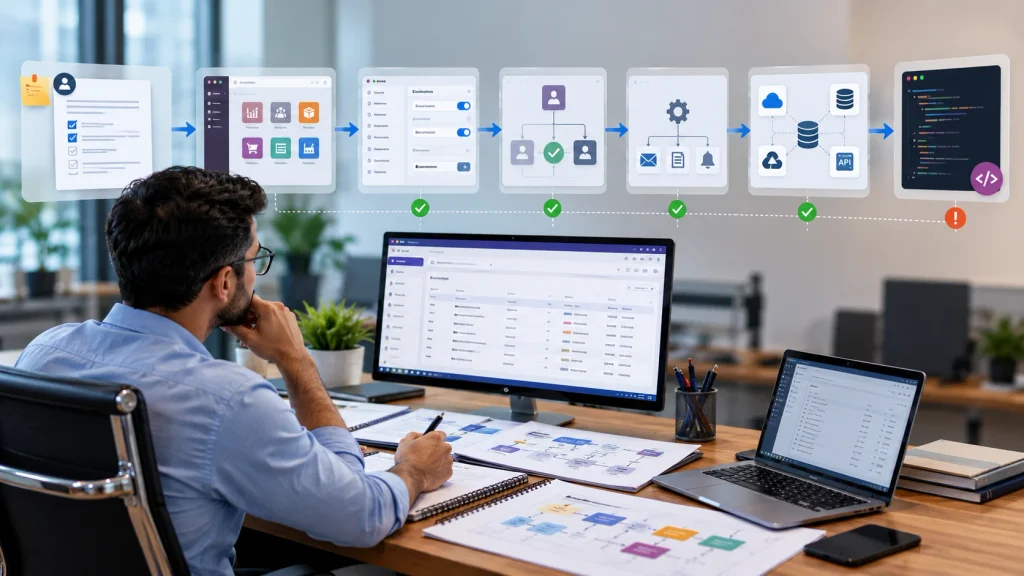
For example, if a company wants an additional approval step for high-value purchases, the expert should first determine whether Odoo’s existing approval and purchasing capabilities can accommodate the process.
If a genuine business gap remains, customization may be appropriate.
The important question is not:
“Can you customize Odoo?”
It is:
“Why does this requirement need customization, and what are the long-term implications?”
Ask the expert to explain:
- Why standard Odoo is insufficient
- What exactly would be customized
- How the customization affects future maintenance
- How it will be tested
- What could happen during future Odoo upgrades
- Whether there is a simpler alternative
A good Odoo expert should sometimes tell you not to customize something.
That ability to challenge a requirement can be more valuable than the ability to develop it.
Look for the Right Functional and Technical Expertise
Not every Odoo requirement needs the same type of expertise. Before hiring an Odoo expert, determine whether your project mainly requires functional guidance, technical development, or both.
Functional expertise is important when you need to:
- Map your existing business processes
- Determine which Odoo modules and workflows fit those processes
- Configure approvals, roles, and business rules
- Validate requirements with users
- Test workflows
- Train employees
Technical expertise becomes important when you need to:
- Develop custom modules
- Connect Odoo with another application
- Build or maintain API integrations
- Perform complex data migration
- Review existing customizations
- Resolve technical or performance issues
For a straightforward implementation, functional expertise may cover much of the work. More complex projects often require functional and technical specialists to work together.
The functional side should define what the business needs. The technical side should determine how that requirement can be implemented reliably.
When these two areas work together, there is less risk of a gap between the business requirement and the Odoo solution delivered.
Ask How They Will Handle Your Data, Integrations, and Existing System
Odoo implementation often starts with existing business data and systems rather than a blank environment. Before hiring an Odoo expert, find out how they will handle what already exists.
Data migration
Ask:
- What data needs to be migrated?
- Which historical records are actually required?
- How will duplicate or incomplete data be handled?
- How will migrated data be validated?
- Will the migration be tested before production?
Moving data is not simply a matter of importing a spreadsheet. Incorrect product records, customer information, opening balances, inventory data, or historical transactions can create operational problems after go-live.
Integrations
If Odoo needs to exchange information with another system, the expert should understand:
- What data needs to move
- Which system owns each piece of information
- How frequently information should be synchronized
- What happens when synchronization fails
- How errors will be identified and resolved
The expert should also explain whether an integration is genuinely required or whether Odoo’s existing functionality can eliminate the dependency.
A strong expert should be able to explain the risks of your current setup, not just connect one system to another. The goal is to make sure data moves reliably between the systems your business depends on.
Find Out How They Will Test Odoo Against Your Real Workflows
A system can be configured correctly and still fail when employees use it in real business situations.
That is why testing should be based on actual business workflows, not just individual features.
For example, a trading company could test a complete sequence:
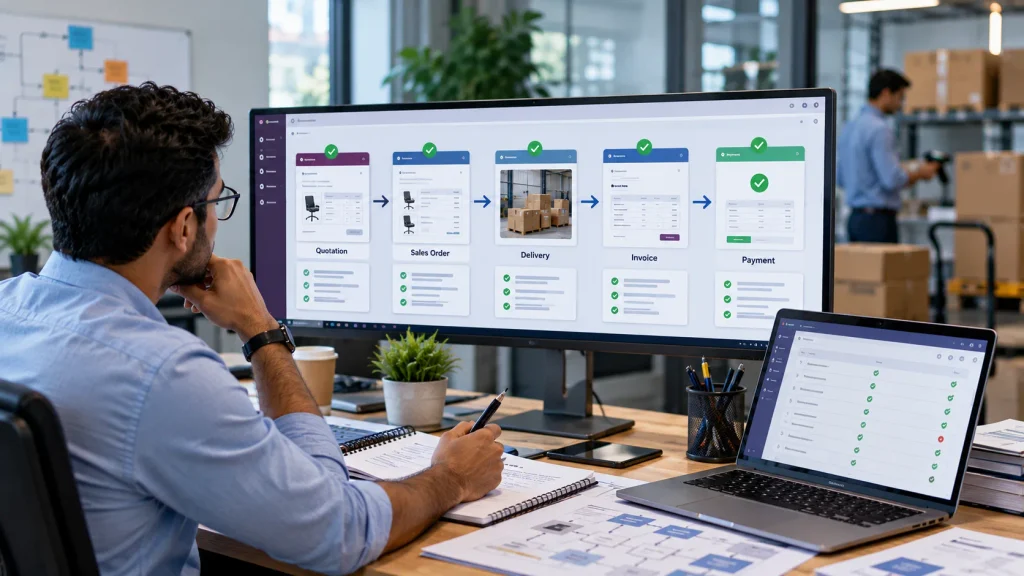
Quotation → Sales Order → Delivery → Invoice → Payment
A manufacturing business may need to test:
Sales Order → Procurement → Material Availability → Manufacturing → Quality → Finished Goods → Delivery
A service company may need to test:
Lead → Opportunity → Quotation → Project → Timesheet → Invoice
The exact scenarios depend on the business.
Before hiring an Odoo expert, ask:
- How will you define testing scenarios?
- Who will perform user acceptance testing?
- Will testing use realistic business data?
- How will failed scenarios be documented?
- Who approves the system before go-live?
- What happens when a requirement does not work as expected?
This is an important distinction between “Odoo has been configured” and “Odoo is ready for our business.”
The second standard is what matters.
Evaluate What Happens After Odoo Goes Live
Implementation is not necessarily the point at which your relationship with an Odoo expert should end.
Once employees start using the system, new requirements and practical issues can appear.
Users may discover that:
- A workflow needs adjustment
- A report needs additional information
- An integration needs troubleshooting
- A configuration needs to be changed
- A user needs additional training
- A business process has changed
- A customization needs improvement
Ask what support is available after launch and how ongoing changes will be handled.
A useful post-go-live arrangement should make it clear:
- Who users contact when they have an issue
- How support requests are handled
- What happens when a problem requires development
- How configuration changes are managed
- How future upgrades will be approached
- How additional requirements are evaluated
You should also understand whether the expert is helping your team become capable Odoo users or creating a system that requires external intervention for every small change.
Good support should help your business operate and improve the system, not create unnecessary dependency.
Questions to Ask Before Hiring an Odoo Expert
Before selecting an Odoo expert, ask questions that reveal how they think about your project rather than only asking how many years they have worked with Odoo.
Business understanding:
How will you understand our current business processes before proposing the Odoo solution?
Standard functionality:
Which of our requirements can Odoo handle without customization?
Customization:
Which requirements do you expect to customize, and why?
Project approach:
How will you move from requirements to configuration, development, testing, and go-live?
Data:
How will you assess, migrate, and validate our existing data?
Integrations:
How will you handle the systems that need to exchange data with Odoo?
Testing:
How will you test Odoo using our actual business workflows?
Expertise:
Who will handle the functional requirements, and who will handle technical development when required?
Support:
What support will be available after go-live?
Future changes:
How will you handle future customizations, upgrades, and changes to our business processes?
The quality of the answers matters more than simply receiving a “yes.”
An Odoo expert should be able to explain why a particular approach is appropriate for your business, what alternatives exist, and what trade-offs you should understand before making a decision.
Frequently Asked Questions
An Odoo consultant typically focuses on business requirements, process analysis, and Odoo implementation. An Odoo expert may cover a broader range of functional and technical areas, including customization, migration, integrations, troubleshooting, and support.
You should consider hiring an Odoo expert when implementing Odoo, fixing an existing setup, planning customization, migrating data, integrating other systems, or improving business workflows.
Look for an expert who understands your business processes, explains why a solution is appropriate, avoids unnecessary customization, tests real workflows, and provides a clear approach to support after go-live.
Choose an Odoo Expert Based on How They Think, Not Just What They Claim
The right Odoo expert should understand your business processes, know when to use standard Odoo functionality, question unnecessary customization, and validate the system against real workflows.
Before hiring, pay attention to the questions they ask, the reasoning behind their recommendations, and how they approach testing and post-go-live support.
If you are planning an Odoo implementation or need help with customization, migration, integration, or support, speak with the Odoo Experts at Odoobots about your requirements.

