

When businesses plan an Odoo implementation, most discussions focus on modules, customization, data migration, and user training. However, one critical factor often receives less attention: hosting infrastructure. The performance, reliability, and security of the hosting environment can significantly influence the success of an Odoo ERP project.
A well-planned implementation can still face challenges if the underlying infrastructure cannot support business operations. Slow response times, unexpected downtime, security vulnerabilities, and scalability limitations can affect user adoption and operational efficiency. Understanding the relationship between hosting and ERP performance helps organizations make better technology decisions and reduce implementation risks.
Can Poor Hosting Really Cause Odoo ERP Implementation Failure?
Yes, poor hosting can contribute to Odoo ERP implementation challenges and, in some cases, increase the risk of project failure. Slow performance, unexpected downtime, security issues, and limited scalability can reduce user adoption and affect overall business operations. Organizations that invest in optimized Odoo hosting infrastructure are better positioned to achieve successful long-term ERP outcomes.
Why Hosting Matters in an Odoo Implementation
Odoo is a comprehensive business management platform that handles multiple processes within a single ecosystem. Sales, inventory, accounting, manufacturing, procurement, CRM, HR, and other modules rely on continuous data exchange and real-time access.
The hosting environment directly impacts:
- Application response times
- Database performance
- System availability
- User experience
- Security and compliance
- Backup and disaster recovery
- Scalability for future growth
If these areas are not properly managed, businesses may experience operational disruptions that negatively affect the implementation process.
How Poor Hosting Affects Odoo Performance
Performance is one of the most visible indicators of ERP success. Employees expect business applications to respond quickly and support their daily workflows without interruptions.
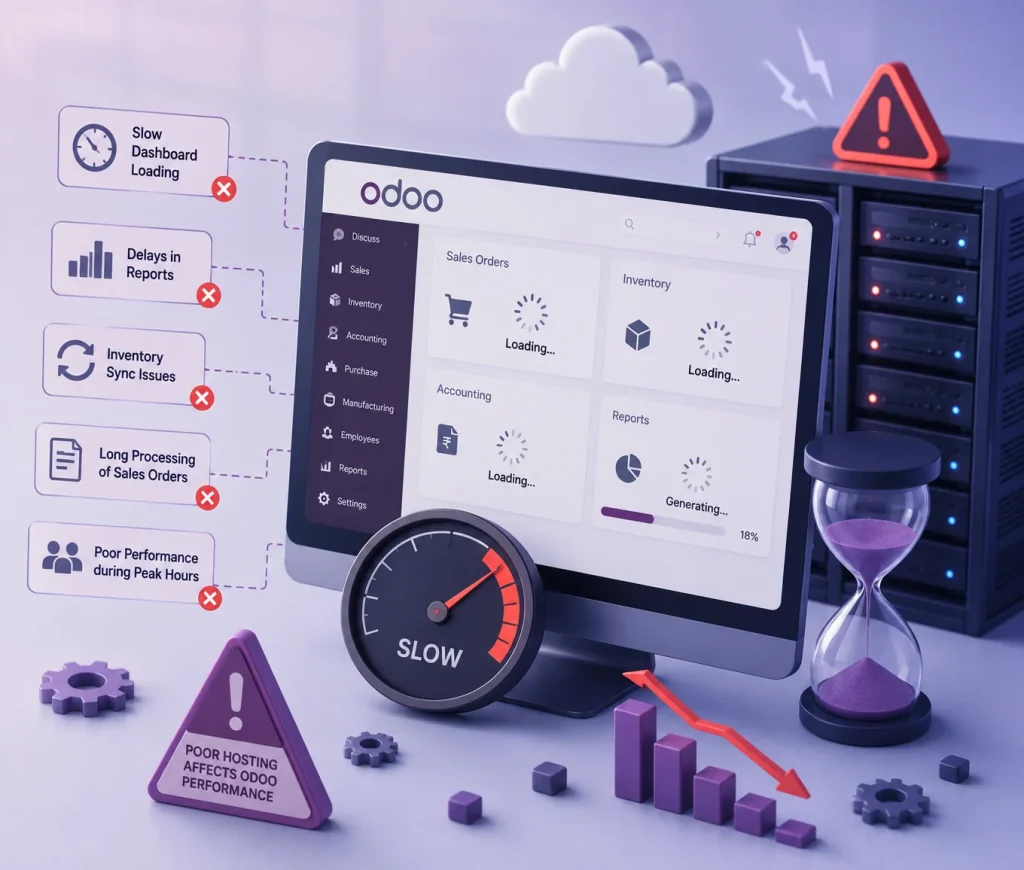
When hosting resources are insufficient, users may encounter:
- Slow dashboard loading
- Delays in generating reports
- Inventory synchronization issues
- Long processing times for sales orders
- Reduced performance during peak business hours
These problems can create frustration among employees and reduce confidence in the ERP system. In many cases, users may return to manual processes or spreadsheets, limiting the value of the implementation.
User Adoption Depends on System Reliability
User adoption is a critical component of every successful ERP deployment. Employees are more likely to embrace new technology when it improves their productivity and simplifies their work.
Poor hosting can negatively influence adoption through:
Frequent Downtime
Unexpected outages interrupt business operations and reduce trust in the platform. Teams that cannot access critical information may develop resistance to the new system.
Slow Response Times
Performance issues create inefficiencies that affect daily tasks. Even small delays become significant when multiple departments rely on the ERP system throughout the day.
Inconsistent User Experience
Different locations, remote workers, and mobile users require stable and reliable access. Infrastructure limitations can create inconsistent experiences across the organization.
Strong hosting infrastructure supports a smoother transition and encourages long-term user engagement.
Can Hosting Problems Delay Odoo Implementation Projects?
The answer is yes.
Implementation timelines often depend on testing, training, data validation, and user acceptance. Infrastructure issues can slow each of these activities.
Common challenges include:
Testing Environment Limitations
Implementation teams require stable environments for configuration, customization, and quality assurance. Performance bottlenecks may delay testing cycles and increase project timelines.
Data Migration Issues
Large datasets require adequate server resources and database optimization. Poor hosting environments can create migration failures or extended processing times.
Training Disruptions
Training sessions depend on responsive systems. Slow applications can reduce training effectiveness and impact user confidence before the system goes live.
These factors demonstrate that hosting is not simply an operational consideration but an important element of project success.
Security Risks Associated With Poor Hosting
Odoo ERP systems contain valuable business information, including:
- Financial records
- Customer data
- Employee information
- Inventory details
- Procurement activities
- Business reports

Without appropriate hosting practices, organizations may face security risks such as unauthorized access, data loss, and extended recovery times.
A professional hosting environment should include:
- SSL encryption
- Firewall protection
- Automated backups
- Regular security updates
- Access control mechanisms
- Continuous monitoring
- Disaster recovery procedures
Security planning should be integrated into the implementation strategy rather than treated as an afterthought.
The Importance of Scalability
Many businesses begin their Odoo journey with a limited number of users and modules. Over time, additional departments, locations, and business functions may be integrated into the platform.
Hosting environments that cannot scale efficiently may create:
- Performance degradation
- Higher maintenance costs
- Infrastructure migrations
- Increased downtime
- Reduced productivity
Scalable infrastructure ensures that Odoo can support future business requirements without major disruptions.
What Businesses Should Look for in an Odoo Hosting Provider
Choosing the right hosting environment requires more than comparing prices. Organizations should evaluate technical capabilities that directly support ERP operations.
Important considerations include:
Odoo-Optimized Infrastructure
Servers should be configured specifically for Odoo workloads, including PostgreSQL optimization, proper worker configuration, SSD or NVMe storage, reverse proxy tuning, and adequate CPU and memory allocation for concurrent users.
High Availability
High-availability environments use redundant infrastructure, automated failover mechanisms, and proactive monitoring to minimize disruptions to critical ERP operations.
Automated Backup Systems
Regular backups help organizations recover quickly from unexpected incidents and protect critical business information.
Performance Monitoring
Continuous monitoring enables proactive issue detection before users experience operational problems.
Technical Support
Access to experienced professionals helps businesses resolve infrastructure challenges more efficiently and maintain system performance.
Does Poor Hosting Always Cause Implementation Failure?
Not necessarily.
An Odoo implementation can succeed despite infrastructure challenges if issues are identified and corrected early. However, poor hosting increases project risks and creates obstacles that affect productivity, adoption, and business continuity.
Organizations that invest in reliable infrastructure from the beginning typically experience:
- Better user satisfaction
- Faster implementation cycles
- Improved system performance
- Stronger security
- Greater scalability
- Reduced operational risks
Hosting should therefore be viewed as a strategic investment rather than a technical expense.
Conclusion
Yes, poor hosting can contribute to Odoo implementation challenges and, in some situations, increase the likelihood of project failure. ERP success depends not only on software functionality but also on the performance, reliability, and security of the underlying infrastructure.
Businesses that prioritize optimized hosting environments are better positioned to achieve successful user adoption, maintain business continuity, and maximize the long-term value of their Odoo investment. By considering infrastructure as part of the implementation strategy, organizations can build a stronger foundation for sustainable growth and digital transformation.
Frequently Asked Questions
Yes. Slow response times and frequent interruptions can reduce user confidence and encourage employees to continue using manual processes instead of the ERP system.
CPU resources, memory allocation, storage performance, database optimization, network stability, and monitoring tools all influence overall Odoo performance.
Cloud hosting can provide flexibility, scalability, and high availability, but the right solution depends on business requirements, security needs, and operational goals.
Absolutely. Hosting decisions should be part of the initial implementation strategy to avoid performance, security, and scalability challenges after deployment.

