
Purchase
Farmer and trader procurement with weight, moisture and quality deductions, advances adjusted against delivery, and vehicle-wise receipts.
WeightDeductionsAdvances
Agribusiness is a stock business where the stock changes while you hold it. Weight drops, moisture varies, grades differ between two sacks from the same farmer, and the price paid is rarely the price on the invoice because deductions happen at the gate.
Odoo handles this when it is configured for it: procurement recorded at actual weight with deductions, lot traceability from farmer to buyer, grading as separate products, and accounting that reconciles against what was physically received.
Businesses running Odoo with OdooBots







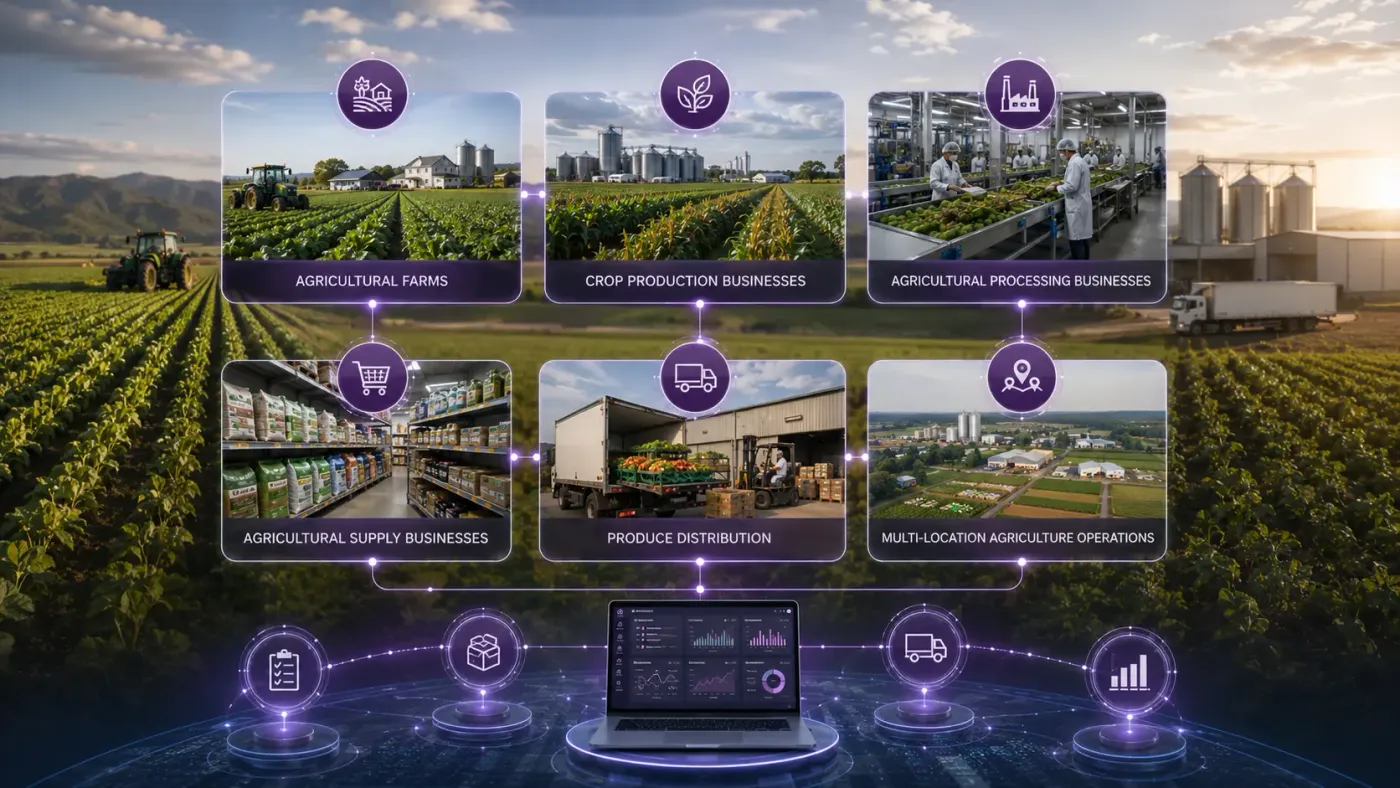
Odoo ERP for agriculture records procurement at the weight and grade actually received, keeps lot traceability from farmer to despatch, and reconciles cash purchases against stock. Purchase handles farmer procurement with moisture and weight deductions, Inventory tracks produce by lot and location including cold storage, grading is modelled as distinct products with yield, and Accounting carries commission, GST and the cash advances most agribusinesses run on.
The decision that matters most is how grading is modelled. Treating grades as one product with a quality field makes stock and margin reporting useless; treating them as separate products with a yield relationship makes both work.
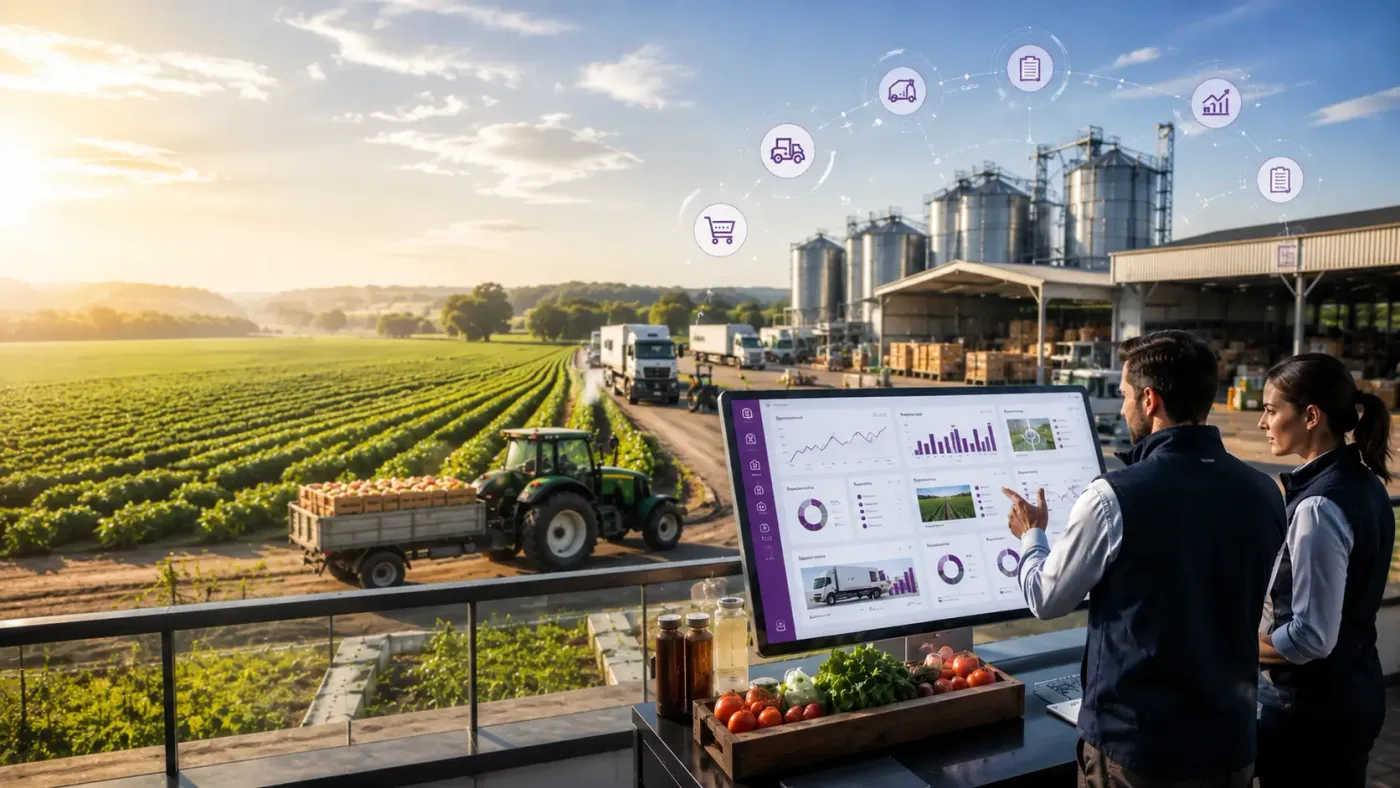
Odoo connects what an agribusiness runs on: Purchase for farmer and trader procurement, Inventory for lots, godowns and cold storage, Sales for buyer orders and contracts, Quality for grade and moisture checks, and Accounting for commission, advances and GST.
Farmer and trader procurement with weight, moisture and quality deductions, advances adjusted against delivery, and vehicle-wise receipts.
Produce by lot and location across godowns and cold storage, with shrinkage, repacking and grading recorded as real movements.
Buyer orders and supply contracts with grade-wise pricing, part despatches and rate revisions that do not require a new order.
Moisture, foreign matter and grade checks recorded against the lot at receipt and before despatch, so claims can be answered with data.
Cash and advance-heavy purchase accounting, commission and mandi charges, GST where applicable, and lot-wise margin.
Cleaning, grading, drying and packing as processing orders with a bill of materials, so yield and loss are measured rather than assumed.
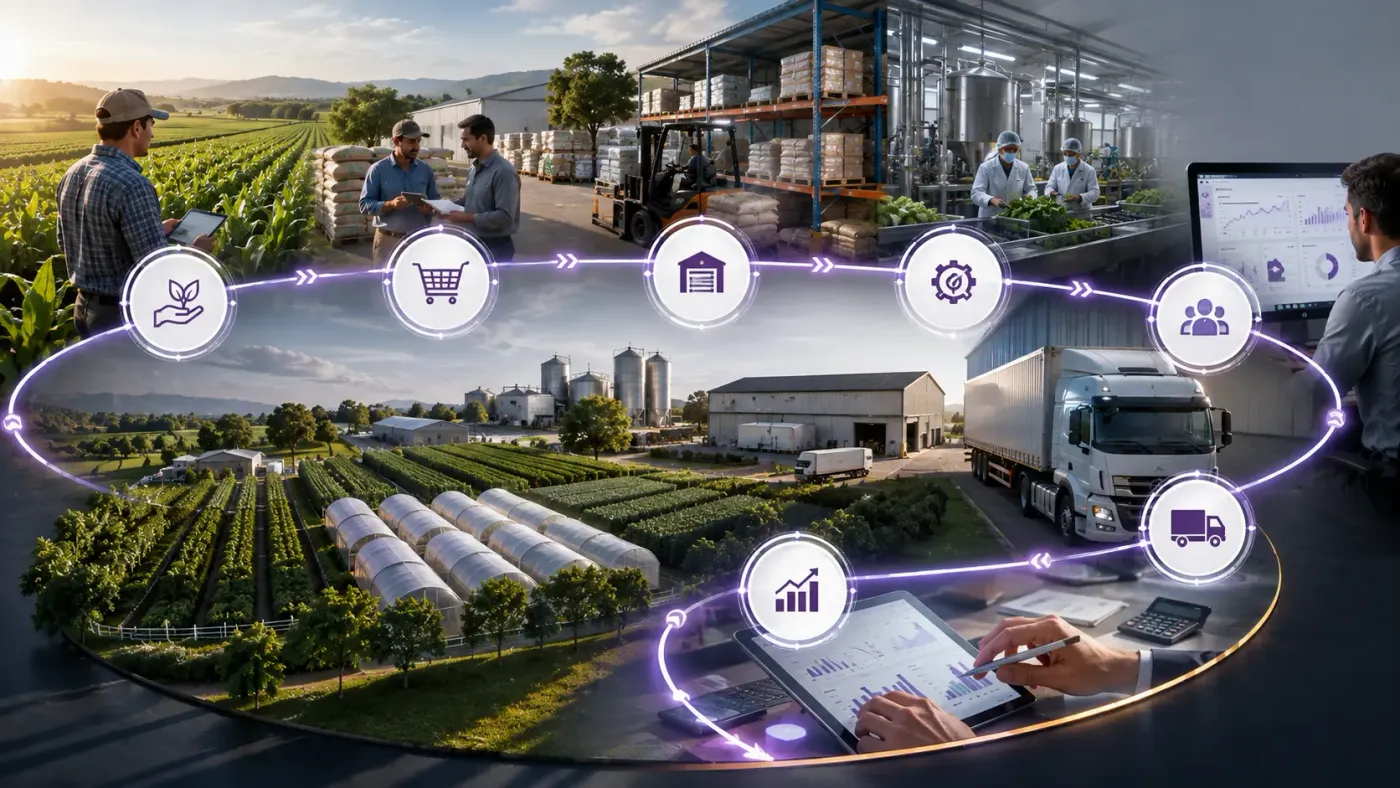
A vehicle arrives, is weighed, and the receipt is recorded against a lot with its moisture and deductions. Grading splits that lot into sellable grades with a recorded yield. Despatch draws from the right grade and location, and the margin on that lot is a report rather than a guess.
These are the configuration decisions that are cheap to make now and structural to change later. We walk through each one before a single record is migrated.
Separate products with a yield relationship, or one product with a quality attribute. The first makes stock and margin reporting work; the second quietly breaks both, and it is expensive to change later.
A farmer, a vehicle load, a day of procurement, or a storage bin. Everything traceable depends on this definition.
Moisture and quality deductions as a price adjustment or as a quantity difference. This decides whether your stock figure matches the physical weighbridge record.
Cash advances to farmers adjusted against future delivery need a clear accounting treatment before the first season, not after it.
Whether storage loss is recorded as an inventory adjustment against the lot or absorbed. Absorbing it is why stock never reconciles.
Bought by quintal, stored by bag, sold by kilogram or tonne. Conversions have to be configured once and correctly.
Procurement volume during the season can be ten times the off-season. The data entry process has to work at the peak, not the average.
The right configuration depends on how your business actually operates, not on your sector label. Two companies with the same description on paper often need different warehouse steps, different approval chains and different reports.
We would rather say this before you buy licences than after. These are the areas where we scope real development, recommend a bolt-on, or tell you Odoo is the wrong tool.
Field mapping, crop planning, irrigation scheduling and satellite or sensor data are a different category of software. Odoo is not a farm management system.
Yield forecasting from weather and crop advisory to farmers needs specialist tools and real agronomic models.
Reading weight directly from a bridge into Odoo is an integration project, not a setting. It is worth doing and it should be scoped.
Animal-level records, breeding cycles and veterinary history need custom development or a dedicated application.
Futures positions and mark-to-market accounting are outside standard Odoo and usually stay in a separate book.
Government scheme and subsidy reporting varies by state and department and almost always needs custom reports.
Implementing Odoo for agriculture needs more than installing the applications. Your ERP should reflect how your operations actually run.
Understand what you procure, how it is weighed and deducted, how grading works, where it is stored, and whether processing changes the product.
Map gate receipt to buyer despatch onto Odoo, and settle grade modelling, lot definition and units of measure before anything is configured.
Configure the applications above around your requirements rather than installing them at their defaults.
Prepare and migrate masters, open items and opening balances. Data cleaning is scoped explicitly, because it is usually the largest single task. See Odoo migration.
Connect the systems you are keeping and build only what configuration genuinely cannot reach. See integration and customization.
Your own team runs real transactions in a test database before go-live. Role-based training for the people who key them daily. See Odoo training.
Cutover planning, opening balance freeze, hypercare in the first weeks, then ongoing support and AMC.
We do not publish one implementation price, because the same application list costs very differently depending on the factors below. We do publish what moves the number, and the price is fixed in writing before work starts.
Most agribusiness ERP attempts fail on two decisions: how grades are modelled and how deductions are recorded. We settle both in week one, with your own weighbridge records in front of us, because every stock and margin report afterwards depends on them.
Product capabilities stated on this page are documented by Odoo. The configuration advice and limitations come from our own implementations.
Tell us how many grades you sell and whether deductions are taken on weight or on rate today. Those two answers decide the configuration, and the diagnosis call is free.