
Manufacturing
The job as a manufacturing order with routing across pre-press, printing, coating, die-cutting, gluing and finishing, each with its own work center.
RoutingWork centersSetup time
Printing is job costing wearing a manufacturing costume. Every order is a different size, substrate, run length and finish, and the margin lives in make-ready, wastage and setup time that nobody records properly.
Odoo connects job-level production, substrate consumption, multi-process routing and invoicing so what a job actually cost is a report rather than an argument.
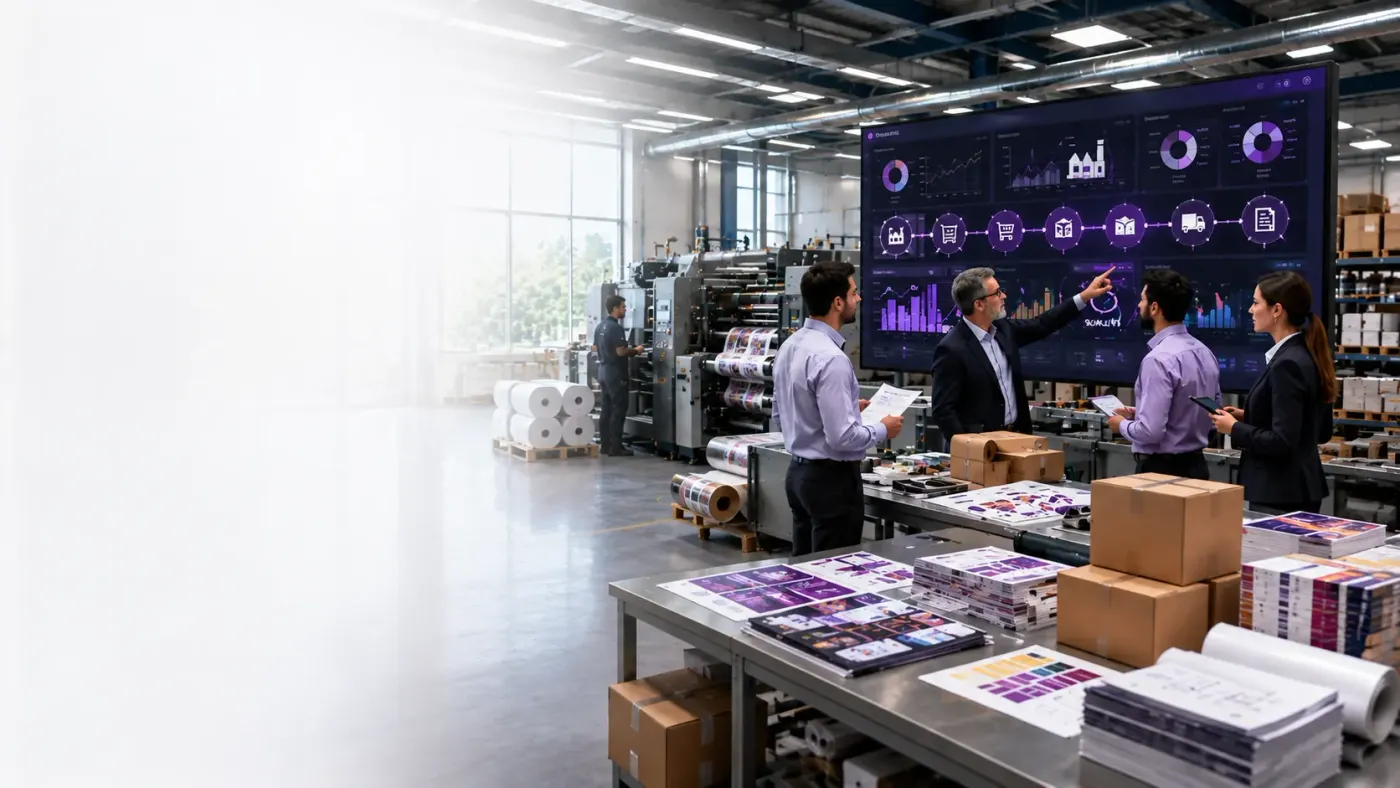
Businesses running Odoo with OdooBots







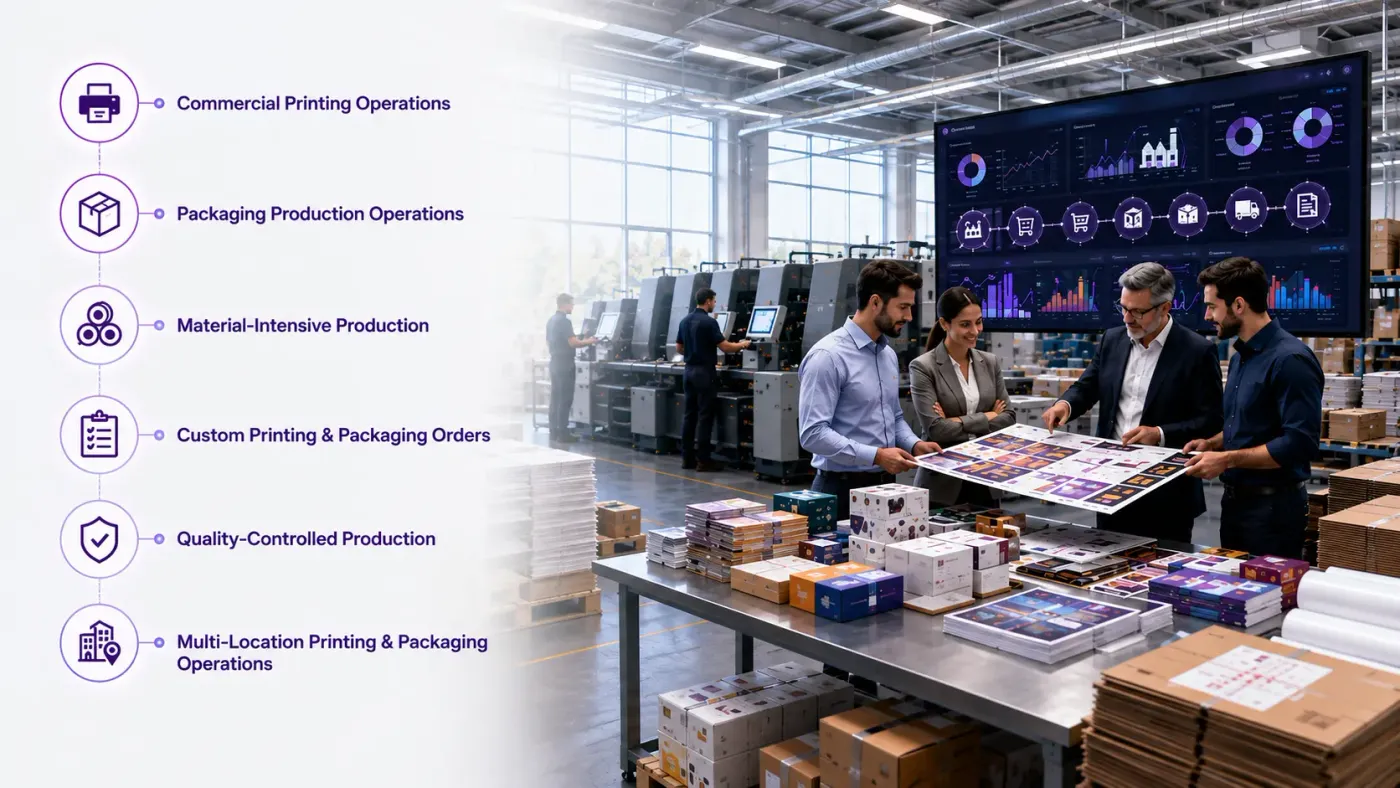
Odoo ERP for printing and packaging runs jobs through multi-process routing while recording what each one really consumed. Manufacturing orders carry the job; work orders cover pre-press, printing, lamination, die-cutting and finishing; substrate is issued in the units it is actually bought in; and analytic accounting brings labour, material and machine time onto the same job.
Make-ready waste is the number that decides whether a print job made money. If it is not recorded as consumption against the job, your material cost and your purchase ledger will never agree.
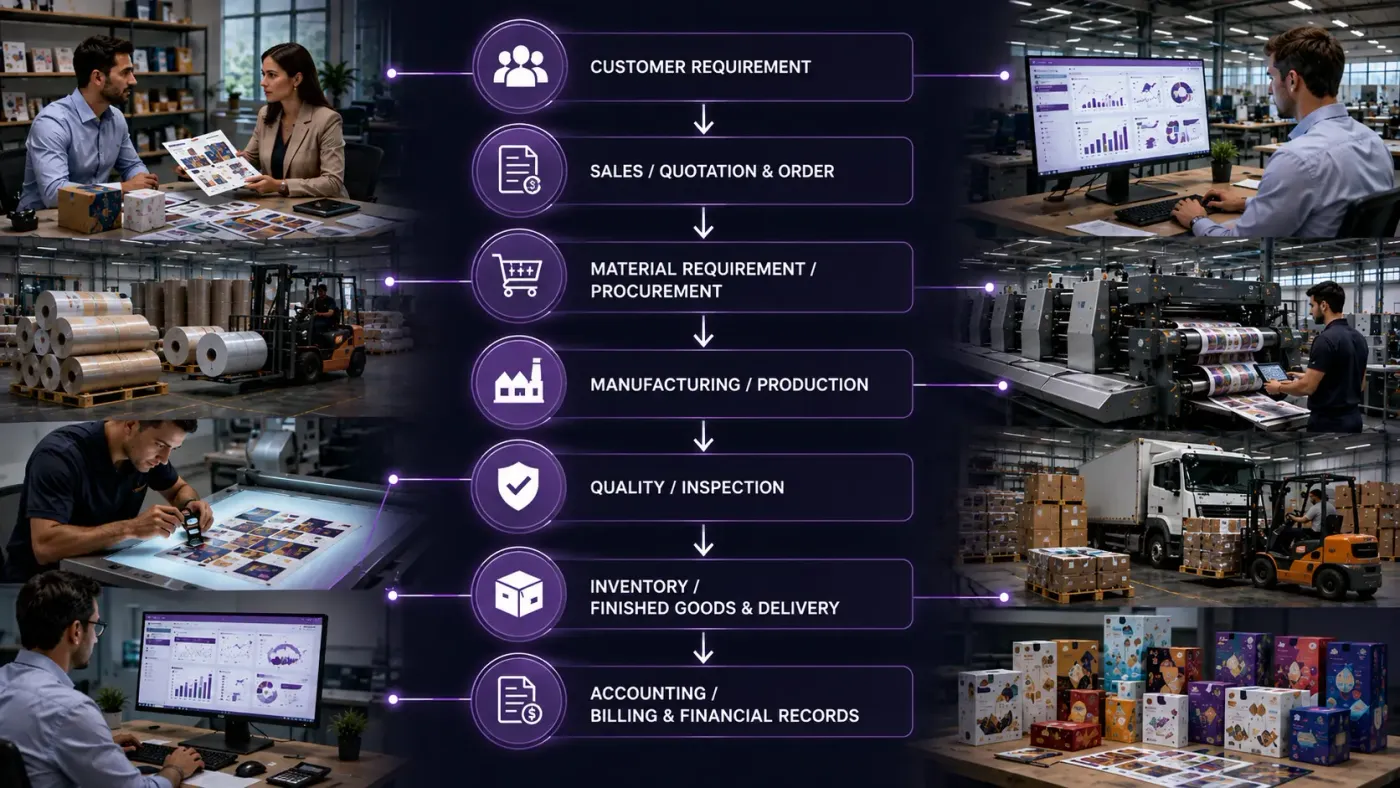
Odoo connects what a print business runs on: Sales for quotations, Manufacturing for the job and its processes, Inventory for substrate and inks, Purchase for materials, Quality for inspection, and Accounting for job-level margin.
The job as a manufacturing order with routing across pre-press, printing, coating, die-cutting, gluing and finishing, each with its own work center.
Substrate by reel, ream or sheet, inks and chemicals by weight, finished cartons by piece, with the unit conversions each one needs.
Quotations that carry size, substrate, run length and finish, with repeat-order history so the second quote takes minutes.
Substrate and ink sourcing with lead times, plus outsourced processes such as lamination or foiling bought against the job.
Colour, registration and dimension checks between processes, with defects recorded against the job rather than a clipboard.
Job-level costing through analytic accounts, GST and e-invoice, and margin reporting by job, customer and process.
A confirmed order becomes a job with its routing. Each process reports its time and its waste. Substrate issued, ink consumed and machine hours all land on the same job, so the margin figure is built from evidence.
These are the configuration decisions that are cheap to make now and structural to change later. We walk through each one before a single record is migrated.
The manufacturing order, a project, or an analytic account per customer order. Everything downstream depends on this and it is expensive to change later.
Bought by kilogram or reel, issued by sheet or metre, costed per piece. Conversion errors here distort every job cost in the system.
Whether setup sheets are issued as consumption against the job or quietly absorbed. Absorbing them is why material cost never reconciles with purchases.
Work centers need separate setup and per-unit times, otherwise short runs look as cheap as long ones and quoting goes wrong.
Lamination, foiling or binding bought in: as subcontracting with material issued, or as a service on the job.
Whether substrate reels are tracked by lot, which matters for shade consistency and for food-contact packaging traceability.
How a repeat order reuses the previous job’s BOM and routing instead of being re-estimated from scratch.
The right configuration depends on how your business actually operates, not on your sector label. Two companies with the same description on paper often need different warehouse steps, different approval chains and different reports.
We would rather say this before you buy licences than after. These are the areas where we scope real development, recommend a bolt-on, or tell you Odoo is the wrong tool.
Rule-based estimating that calculates imposition, ups and run cost from size and quantity is specialist print MIS territory, not standard Odoo.
Odoo records consumption; it does not calculate the layout. That stays in pre-press software.
Pulling counts and run time directly from presses needs an integration, not a configuration setting.
Colour recipes with proportional mixing need custom modelling if you formulate in-house.
Per-item personalised printing is a pre-press and digital-front-end function.
Some print-specific benchmarks and shop-floor dashboards need custom reports built on the analytic data.
Implementing Odoo for printing & packaging needs more than installing the applications. Your ERP should reflect how your operations actually run.
Understand your job types, processes, substrate units, how waste is recorded today, and whether estimating stays in a separate system.
Map quotation to despatch onto Odoo, and settle the job costing unit and substrate units of measure before anything is configured.
Configure the applications above around your requirements rather than installing them at their defaults.
Prepare and migrate masters, open items and opening balances. Data cleaning is scoped explicitly, because it is usually the largest single task. See Odoo migration.
Connect the systems you are keeping and build only what configuration genuinely cannot reach. See integration and customization.
Your own team runs real transactions in a test database before go-live. Role-based training for the people who key them daily. See Odoo training.
Cutover planning, opening balance freeze, hypercare in the first weeks, then ongoing support and AMC.
We do not publish one implementation price, because the same application list costs very differently depending on the factors below. We do publish what moves the number, and the price is fixed in writing before work starts.
Print margin hides in make-ready and setup time. We configure both as real consumption against the job rather than absorbing them into overhead, which is why our print clients can reconcile material cost against purchases.
Product capabilities stated on this page are documented by Odoo. The configuration advice and limitations come from our own implementations.
Tell us how many processes a typical job passes through and whether make-ready is recorded today. Those two answers decide the configuration, and the diagnosis call is free.