
Manufacturing
Cutting, stitching, finishing and packing as work orders against the style BOM, with work centers that match your line or your job workers.
Work ordersRoutingOperations
Apparel breaks ERPs on one thing: the grid. One style becomes sixty SKUs the moment you add sizes and colours, and every system that treats them as sixty unrelated products collapses under it.
Odoo models style, colour and size as attributes of one product, so purchasing, production, stock and sales all speak in styles while the warehouse counts units.
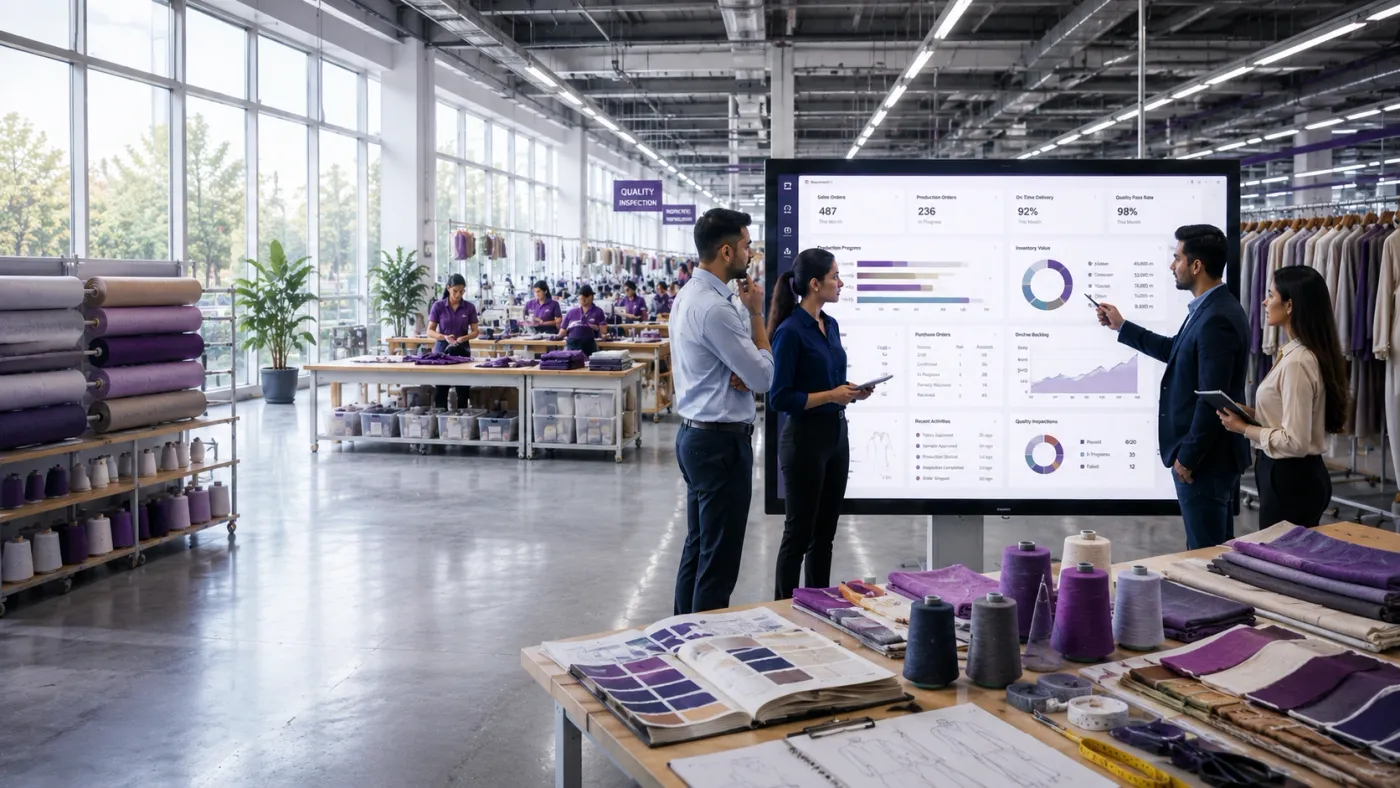
Businesses running Odoo with OdooBots







Odoo ERP for textile and apparel manages style-level product structures, fabric and trim consumption, production and quality in one system. Product attributes generate the size and colour grid; bills of materials hold fabric consumption per size; manufacturing orders drive cutting, stitching and finishing; and inventory tracks finished units by variant.
Decide the attribute structure before you load a single style. Whether colour is an attribute or a separate product determines how every report, purchase order and stock count behaves for the life of the system.
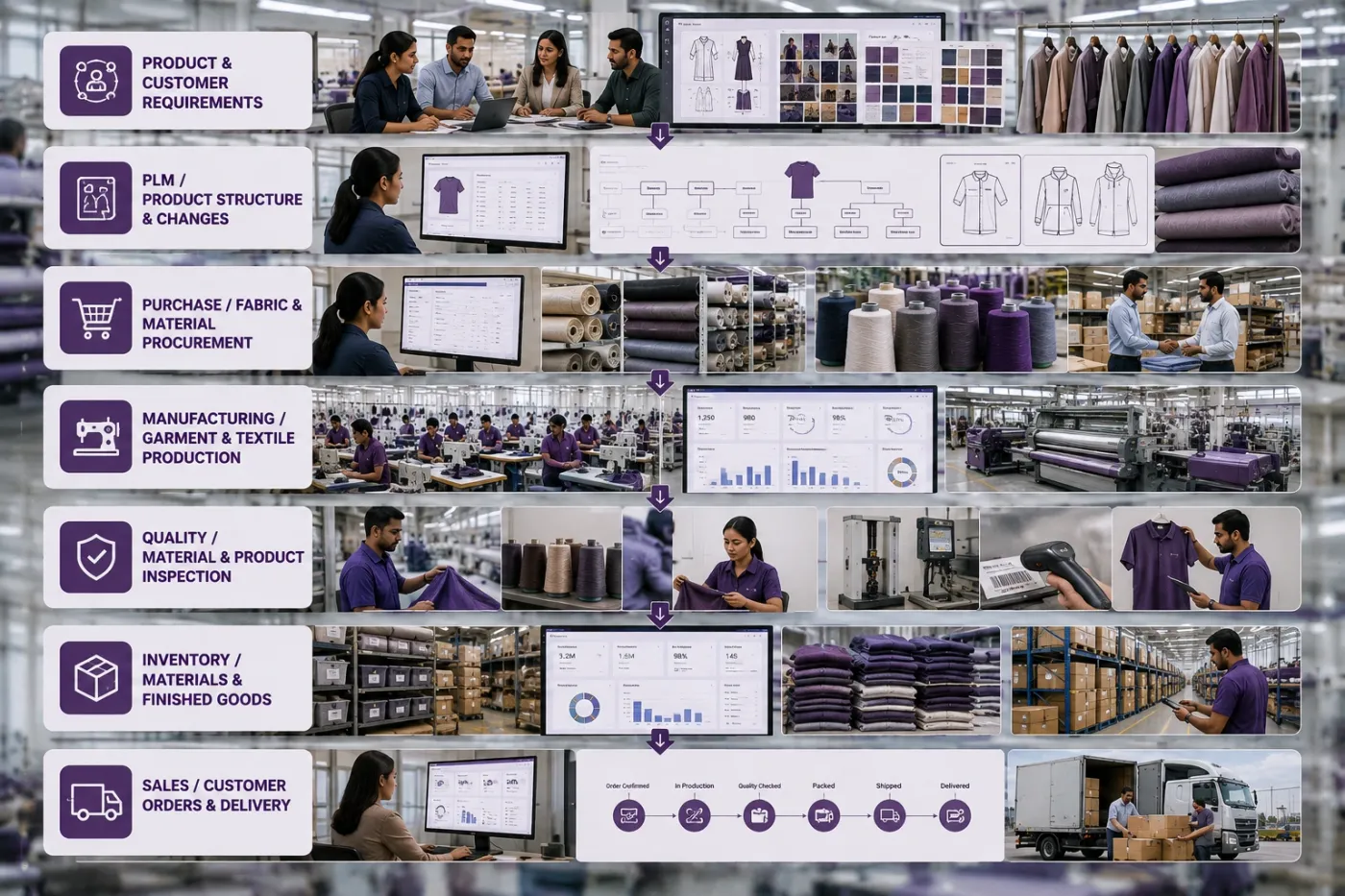
Odoo connects the applications an apparel business runs on: Manufacturing for cutting, stitching and finishing, PLM for style and BOM revisions, Inventory for fabric and finished goods, Purchase for fabric and trims, Sales for orders, and Quality for inspection.
Cutting, stitching, finishing and packing as work orders against the style BOM, with work centers that match your line or your job workers.
Style and BOM revision control through change orders, so a trim change reaches production and costing at the same time.
Fabric by roll or metre, trims by piece, finished goods by variant, with the units of measure each one is genuinely bought and issued in.
Fabric and trim sourcing with lead times that reflect dyeing and mill schedules rather than catalogue delivery.
Order capture at style level with size curves, customer pricing, and delivery dates checked against production capacity.
Inspection between operations and before despatch, with defects recorded against the batch rather than on a clipboard.
An order is placed at style level. Production consumes fabric and trims against the style BOM. Finished units enter stock as variants, and the size curve a customer ordered is what gets picked.
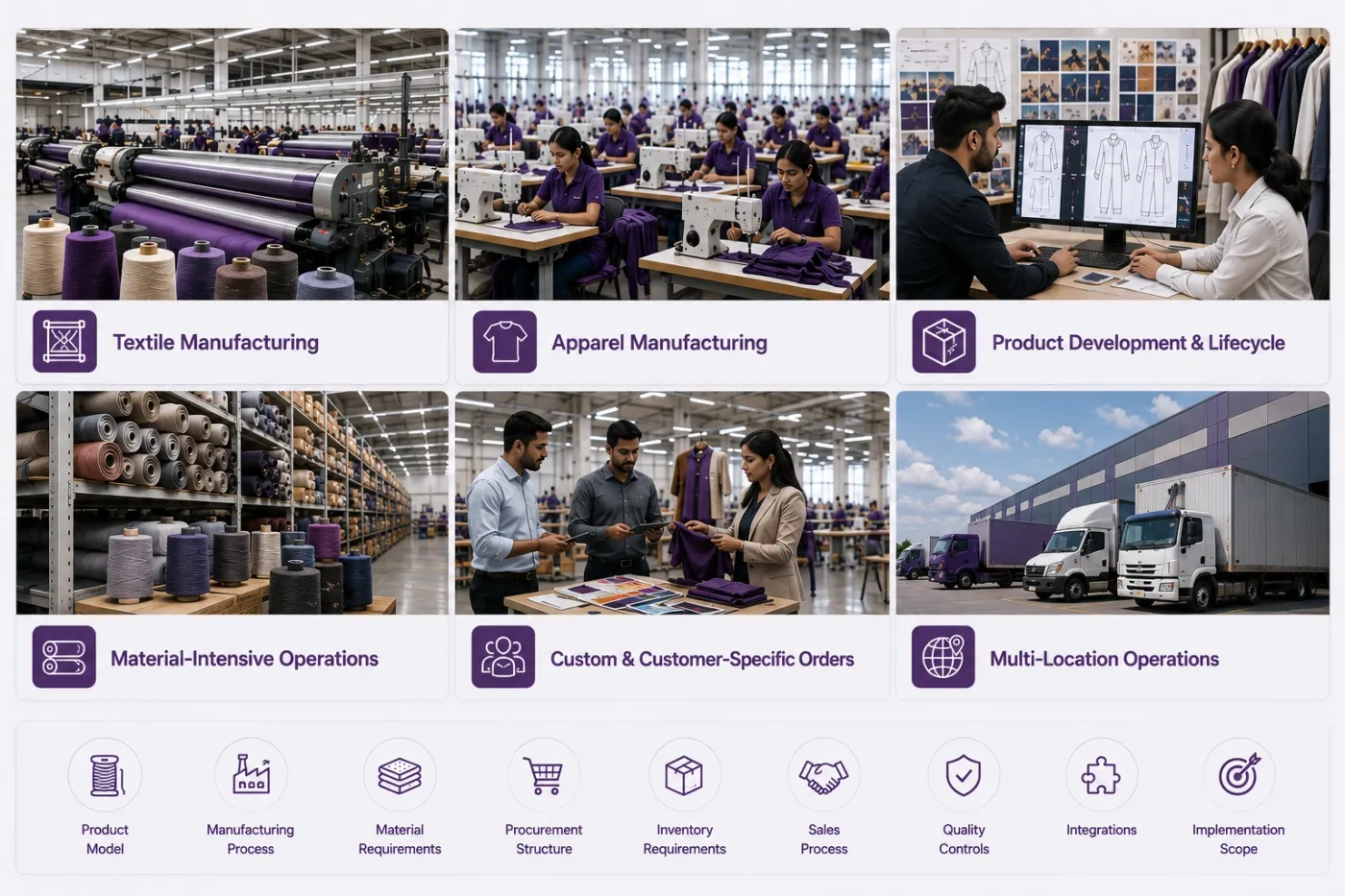
These are the configuration decisions that are cheap to make now and structural to change later. We walk through each one before a single record is migrated.
Which of style, colour, size and fit are attributes and which are separate products. This single decision shapes every report and stock count for the life of the system.
Fabric bought in kilograms, issued in metres, costed per piece. Getting the UoM conversions wrong makes consumption and margin both wrong.
Whether fabric consumption varies per size in the BOM or is averaged. Averaging is simpler and quietly misstates cost on the extremes.
Subcontracted stitching as Odoo subcontracting with components issued, or as a bought service. The first gives you real WIP visibility.
After cutting, after stitching, before packing, or all three. Each gate is configuration, instruction text and operator training.
Whether rolls are tracked by lot with remaining length, which matters for shade matching and for honest wastage figures.
How a buyer’s size ratio is captured and carried to production, instead of being re-typed into a spreadsheet.
The right configuration depends on how your business actually operates, not on your sector label. Two companies with the same description on paper often need different warehouse steps, different approval chains and different reports.
We would rather say this before you buy licences than after. These are the areas where we scope real development, recommend a bolt-on, or tell you Odoo is the wrong tool.
Nesting, marker efficiency and lay planning are specialist CAD functions. Odoo records the result; it does not compute it.
Matching dye lots across a cut needs custom fields and discipline. It is not a native concept.
A style with many attributes generates hundreds of variants; reporting and stock-taking get heavy without deliberate configuration.
Export buyer portals for packing, inspection and documentation need integrations that are specific to each buyer.
Operator pay by piece and operation usually needs payroll customisation.
Consumption that changes with fabric width or post-wash shrinkage needs custom calculation.
Implementing Odoo for textile & apparel needs more than installing the applications. Your ERP should reflect how your operations actually run.
Understand your style structure, size and colour ranges, fabric units of measure, job work arrangements and where inspection happens today.
Map order to despatch onto Odoo, and settle the attribute structure and units of measure before any style is loaded.
Configure the applications above around your requirements rather than installing them at their defaults.
Prepare and migrate masters, open items and opening balances. Data cleaning is scoped explicitly, because it is usually the largest single task. See Odoo migration.
Connect the systems you are keeping and build only what configuration genuinely cannot reach. See integration and customization.
Your own team runs real transactions in a test database before go-live. Role-based training for the people who key them daily. See Odoo training.
Cutover planning, opening balance freeze, hypercare in the first weeks, then ongoing support and AMC.
We do not publish one implementation price, because the same application list costs very differently depending on the factors below. We do publish what moves the number, and the price is fixed in writing before work starts.
Apparel implementations are won or lost on the attribute structure and the units of measure. We settle both in week one, before a single style is loaded, because unpicking them later means re-costing history.
Product capabilities stated on this page are documented by Odoo. The configuration advice and limitations come from our own implementations.
Tell us how many sizes and colours a typical style carries, and how fabric is bought and issued. Those two answers shape the whole configuration, and the diagnosis call is free.