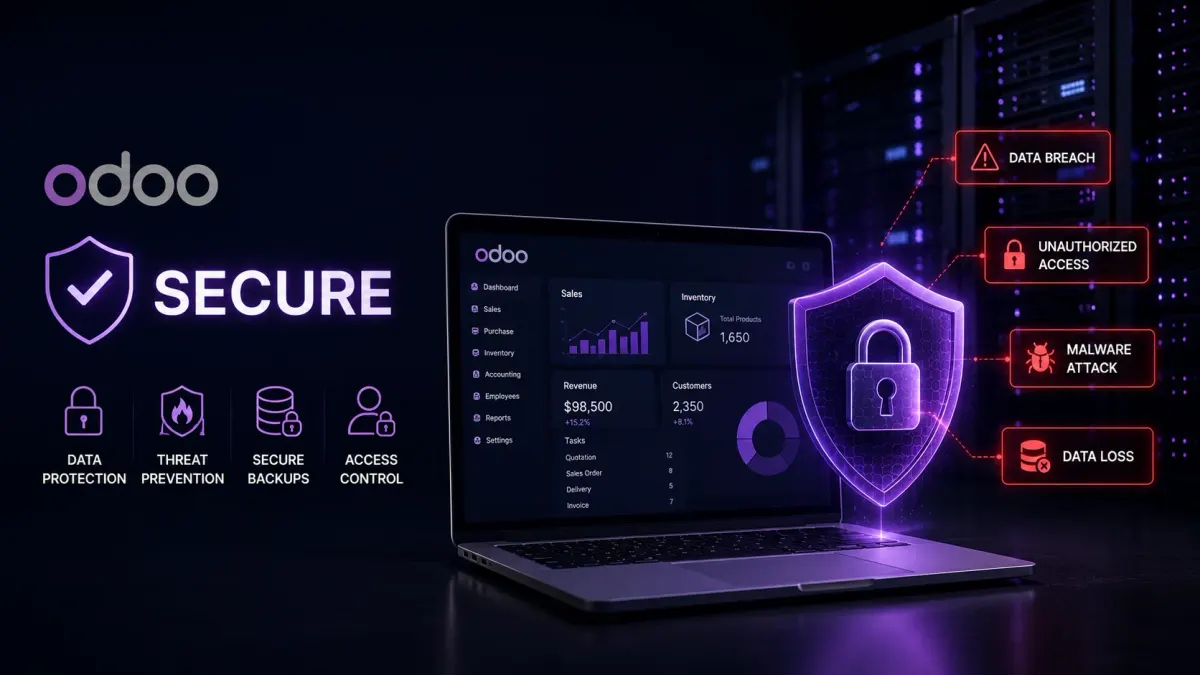
Why Odoo Infrastructure Security Requires Continuous Monitoring

Modern ERP systems manage some of the most critical aspects of business operations, including financial data, customer information, inventory records, employee details, and operational workflows. Protecting this information requires more than installing security updates or enabling firewalls. Continuous infrastructure monitoring plays an essential role in maintaining the security, stability, and availability of Odoo environments.
As businesses become increasingly dependent on ERP platforms, security monitoring helps organizations identify potential threats, prevent downtime, and respond to issues before they affect daily operations.
Why Infrastructure Security Matters for Odoo
An Odoo environment consists of multiple components working together, including application servers, databases, operating systems, cloud infrastructure, network configurations, and backup systems. A weakness in any of these layers can create operational risks.
Businesses may encounter challenges such as:
- Unauthorized login attempts
- Server misconfigurations
- Database performance issues
- Malware attacks
- Data loss caused by human error
- Unexpected downtime
- Delayed software updates
- Resource exhaustion during peak usage
Continuous monitoring helps organizations maintain visibility across these components and respond quickly when unusual activities occur.
Security Monitoring Goes Beyond Traditional Protection
Many organizations assume that security begins and ends with antivirus software or firewall rules. In reality, modern ERP security requires ongoing observation and proactive management.
Continuous monitoring typically includes:
- Server health monitoring
- Login activity analysis
- Resource utilization tracking
- Database performance monitoring
- Backup verification
- System update management
- Network traffic analysis
- Security event detection
This approach allows businesses to identify issues before they become critical operational problems.
Detecting Unauthorized Access Attempts
ERP systems often contain sensitive business information, making them attractive targets for unauthorized access attempts.
Continuous infrastructure monitoring provides visibility into:
- CPU utilization
- Memory consumption
- Disk usage
- Database response times
- Background job performance
- Network activity
Early detection enables organizations to implement corrective measures before data integrity or business continuity is affected.
Backup Monitoring Protects Business Continuity
Creating backups is only one part of a comprehensive security strategy. Organizations must also verify that backup systems function correctly and can be restored when necessary.
Effective backup monitoring includes:
- Automated backup verification
- Storage integrity checks
- Recovery testing
- Retention policy management
- Alert notifications for failed backups
Without continuous monitoring, businesses may discover backup failures only after experiencing data loss or system disruptions
Why Backup Monitoring Matters
A growing retail business using Odoo for inventory and sales operations may rely on automated daily backups. Without monitoring, a failed backup process could remain unnoticed until a system failure occurs. Continuous backup verification helps ensure that recovery points are available when business continuity depends on them.
Security Monitoring Supports Regulatory Compliance
Many organizations operate within industries that require strong data protection practices and operational controls.
Continuous monitoring helps support compliance efforts by providing:
- Audit trails
- Access logs
- Security event records
- User activity tracking
- Change management documentation
Maintaining visibility into infrastructure activities can simplify compliance processes and strengthen organizational accountability.
Preventing Downtime Before It Affects Operations
Downtime can interrupt critical business processes, including sales, procurement, accounting, manufacturing, and customer service activities.
Continuous monitoring allows teams to identify warning signs such as:
- Increasing server loads
- Database bottlenecks
- Failed background processes
- Storage limitations
- Network disruptions
Addressing these issues proactively reduces operational risks and improves overall system reliability.
The Role of Automated Alerts
Manual system checks are often insufficient for modern business environments.
Automated monitoring solutions provide real-time notifications when predefined thresholds or unusual events occur.
Examples include:
- High CPU utilization alerts
- Failed backup notifications
- Database performance warnings
- Security event detection
- Storage capacity alerts
- Application service failures
These alerts enable faster responses and minimize the impact of potential problems.
Why Managed Odoo Hosting Environments Prioritize Security Monitoring
Managed hosting environments typically include proactive infrastructure management as part of their service offerings.
This approach often provides:
- Continuous server monitoring
- Automated security updates
- Regular backup verification
- Performance optimization
- Incident response procedures
- Infrastructure maintenance
- Availability monitoring
For growing businesses, professional monitoring helps reduce operational burdens while improving overall system resilience.
Businesses that rely on Odoo for critical operations often benefit from managed hosting environments that provide proactive monitoring, automated backups, and infrastructure management designed to support long-term reliability and security.
Best Practices for Odoo Infrastructure Security
Organizations can strengthen their infrastructure security by following several best practices:
Implement Strong Access Controls
Use role-based permissions, strong passwords, and multi-factor authentication where appropriate.
Monitor System Activity Continuously
Review login records, server metrics, and security events regularly to identify unusual behavior.
Keep Systems Updated
Apply operating system, database, and application updates to address known vulnerabilities.
Test Backup Recovery Procedures
Regular restoration testing ensures that backup systems remain reliable during emergencies.
Establish Incident Response Processes
Document procedures for handling security events and infrastructure disruptions to reduce recovery times.
Frequently Asked Questions
Security monitoring helps organizations detect unauthorized activities, verify backup integrity, maintain server performance, and respond quickly to potential threats before they disrupt business operations.
No. Odoo security also depends on the underlying infrastructure, including servers, databases, networks, operating systems, and backup systems. Continuous monitoring helps protect each of these components.
Critical business systems should be monitored continuously through automated tools and alert mechanisms to ensure rapid detection and response to potential issues.
Yes. Monitoring helps identify performance bottlenecks, resource shortages, and infrastructure problems early, reducing the likelihood of unexpected outages.
Businesses should evaluate monitoring capabilities, backup procedures, update management, access controls, incident response processes, and overall infrastructure reliability.
Conclusion
Securing an Odoo hosting requires more than traditional protection methods. Continuous infrastructure monitoring provides the visibility needed to identify threats, maintain performance, and protect critical business operations.
Organizations that invest in proactive monitoring can improve system reliability, strengthen data protection, and reduce operational risks as their ERP environments grow.
For businesses that depend on Odoo for daily operations, a well-managed hosting environment with continuous security monitoring forms an important foundation for long-term stability and business continuity.