OdooBots
Loading
Odoo · development explained

What is Odoo Development?

Roughly half of what arrives as “we need a developer” turns out to be a setting. Knowing which half you are in is worth real money.

This page explains what Odoo development is, what a module is made of, and what it costs you later.

Arun KumarOdoo Functional Consultant, 8+ years| Reviewed by Suresh Babu| Updated 25 November 2026| Including when not to
0Odoo projects delivered
0Consultants & developers
Your repoYou keep the code
ChennaiAmbattur, Tamil Nadu
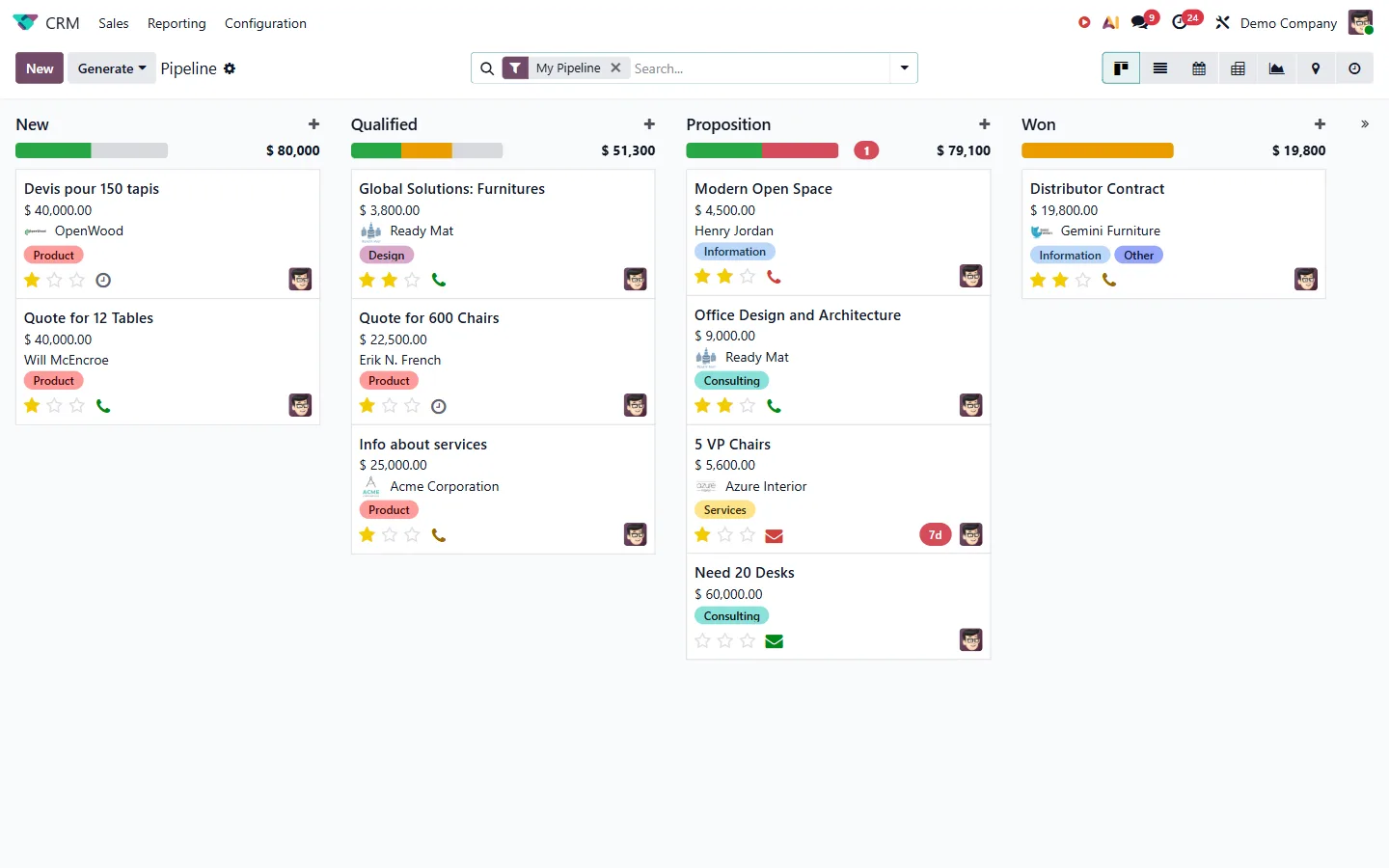
What Odoo development is — the Odoo CRM pipeline, the kind of screen a custom module extends
2
Two routesconfig or code

Businesses whose Odoo we build on

Dhanalakshmi Industries logo Sanjeev Autoparts logo Electro Flux Equipments logo Anchor Marine Equipment Company logo NEXG logo PV Constructions logo SESS logo
Definition

What is Odoo development?

Odoo development is writing code that extends Odoo: a custom module that adds a field, a screen, a report, an automation or an integration that standard Odoo does not have. Odoo is written in Python with its own ORM, its views defined in XML, its reports in QWeb and its front end in the OWL framework. A developer inherits existing Odoo models and extends them rather than editing Odoo’s own files, which is the difference between code that survives an upgrade and code that does not.

The most valuable thing an Odoo developer does is tell you which requests do not need them.

Module
A folder of code you install. Custom development means writing one of these.
Inheritance
Extending an Odoo model rather than editing it. The reason an upgrade can carry your code forward.
QWeb
Odoo’s template language, used for printed documents and reports.
OWL
Odoo’s front-end framework, from version 16 onwards.
The line that saves money

Configuration or development?

Work out which side a requirement sits on before anyone quotes it. Everything on the left costs nothing now and nothing at upgrade time.

No developer needed

Configuration already does this

  • Adding users, roles and who may approve what.
  • New journals, payment methods, taxes and fiscal positions.
  • Price lists, discount rules and customer-specific pricing.
  • Warehouse locations, routes and reordering rules.
  • Email templates, automated actions and scheduled follow-ups.
  • Changing what a list shows, grouping it and saving that as a default.
This is development

Code, and it will need maintaining

  • A calculation Odoo does not have, on a field Odoo does not have.
  • A printed document whose layout or logic standard QWeb templates cannot reach.
  • An integration with a system that has no existing connector.
  • A screen or workflow that does not correspond to any Odoo model.
  • Behaviour that has to differ by company inside one multi-company database.
  • Anything that must still work after the next two version upgrades.
What it costs later

The part nobody prices at the start

Development is not expensive because of the day it is written. It is expensive because of every version after it.

  1. Every custom module is read again at each upgrade

    ORM methods change, view inheritance changes, sometimes field names change. Forty custom modules is a different upgrade from four.

  2. Code that edits core does not upgrade at all

    It has to be rewritten. Ask at the quote stage whether what you are buying extends Odoo or edits it.

  3. Undocumented code is more expensive than no code

    If the next developer cannot read it, you pay for the discovery twice.

  4. Customisation sometimes becomes redundant

    A new Odoo version, or a move to Enterprise, can ship the thing you paid to build. That is a good outcome, and it only shows up if somebody checks.

  5. Your repository is the insurance

    Code in your own repository, with visible commits, means you can change supplier without changing system.

Why OdooBots

Who writes it

Based inAmbattur, ChennaiTamil Nadu 600053, India
Phone+91 98414 81435Mon–Sat, business hours IST
VersionsOdoo 13 – 19Community and Enterprise
Your codeYour repositoryYou keep what we write
FAQ

Odoo development: common questions

What language is Odoo written in?
Python on the server, with views in XML, printed documents in QWeb templates and the web client in Odoo’s own OWL JavaScript framework from version 16 onwards. PostgreSQL is the database.
How do I learn Odoo development?
Odoo publishes a developer tutorial and full documentation, and the fastest route is to build a small module against a local Community install rather than to read. Python and some SQL are the prerequisites; the Odoo-specific part is the ORM and the view inheritance system, and that is what takes the time.
Is Odoo development difficult?
For a competent Python developer the language is not the obstacle. The ORM, the inheritance model and knowing what Odoo already does are, and the last of those is what separates a developer who saves you money from one who writes a module you did not need.
How much does Odoo customisation cost?
It is quoted per requirement, and the honest variables are how much of it standard Odoo already handles, how many modules it touches and whether it must survive upgrades. Anything named as custom in a quote is also a line you will pay again at each version.
Can I hire one Odoo developer rather than a team?
Yes, and for a defined piece of work that is often the right shape. What matters is that the person is named, that the code lands in your repository, and that someone functional has agreed what should be built before anyone writes it.
Sources

Odoo’s own developer documentation

Not sure if you need a developer?

Send us the requirement. If configuration already does it, we will tell you that, and it costs you nothing.